A stiff lower back can change far more than the way you move. It can interrupt sleep, make long workdays feel unbearable, and turn a simple drive or walk into a source of hesitation. Vasti treatment for back pain offers a focused Ayurvedic approach for people seeking gentle, medically guided support for persistent stiffness, muscular tension, and discomfort in the lower back.
In Ayurveda, back pain is not viewed as a condition with one universal answer. The location of pain, its quality, digestive health, daily habits, stress load, sleep, activity level, and individual constitution all matter. A localized Vasti protocol may be recommended as part of a broader care plan that addresses the factors contributing to discomfort rather than simply masking the symptom.
What Is Vasti Treatment for Back Pain?
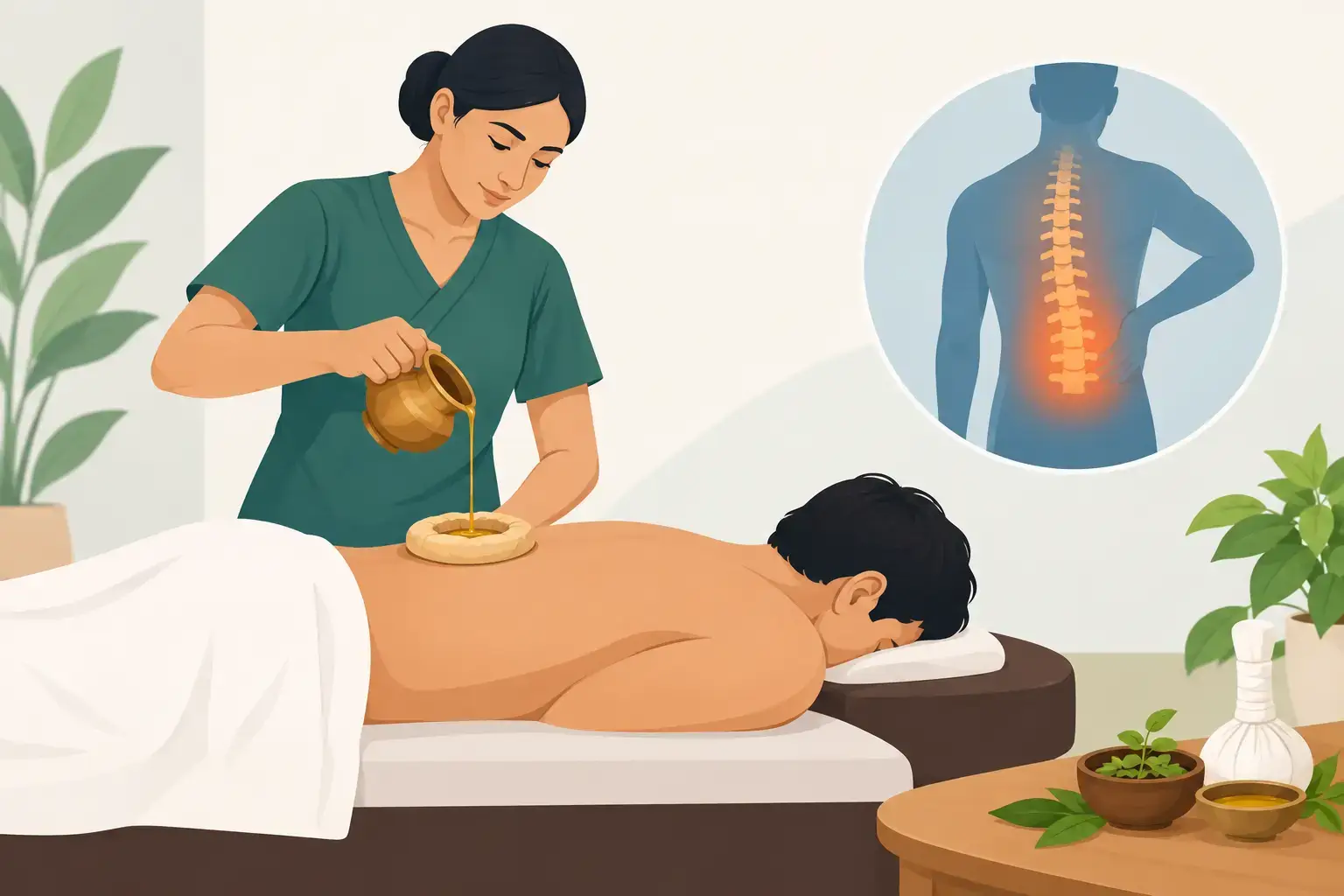
When back pain is the concern, the therapy most often referred to is Kati Vasti. Kati means lower back, while Vasti refers to a localized holding treatment. A trained therapist creates a small reservoir over the affected area, traditionally using a dough ring, and fills it with comfortably warm, physician-selected medicated herbal oil.
The oil is maintained at an appropriate temperature for a prescribed period, allowing the lower back to receive sustained, localized warmth and herbal application. Depending on the assessment, Kati Vasti may be followed by a gentle therapeutic massage, herbal poultice therapy known as Kizhi, or other treatments selected by the Ayurvedic doctor.
This external treatment is different from Basti, one of the classical Panchakarma therapies involving medicated oils or herbal decoctions administered under medical supervision. Both have an important place in Ayurveda, but they serve different clinical purposes. Your doctor will clarify whether localized Kati Vasti, internal Basti, or another approach is appropriate for your needs.
Why Ayurveda Uses Localized Oil Therapy
Ayurveda commonly associates pain, dryness, tightness, and irregular movement with an aggravation of Vata dosha. Long hours of sitting, travel, insufficient rest, stress, irregular meals, cold exposure, and overexertion can all contribute to this pattern. In the lower back, it may show up as aching, pulling, stiffness after rest, or discomfort that worsens with activity.
Warm medicated oils are traditionally used to calm Vata, nourish the tissues, and support comfortable movement. The steady warmth of Kati Vasti can help relax guarded muscles and provide a deeply soothing experience for a tense lower back. For many people, that sense of ease is especially welcome when pain is connected with sedentary work, physical strain, or stress-related muscle holding.
Still, treatment should never be reduced to warmth alone. The herbal oil, duration, temperature, treatment frequency, and accompanying therapies should be decided after assessment. A person with an acute inflammatory presentation may require a different approach from someone with long-standing dryness, degenerative changes, or muscular spasm.
Common concerns it may support
A medically guided localized Vasti plan may be considered for chronic lower-back stiffness, muscular strain, postural discomfort, sacroiliac-area tension, mild radiating discomfort, and back fatigue associated with prolonged sitting or standing. It may also support wellness care for individuals with recurring discomfort who want to improve mobility and maintain a more balanced routine.
The goal is not to promise an instant cure. Back pain can have many causes, including disc conditions, nerve compression, inflammatory disease, osteoporosis, kidney concerns, or injury. Ayurveda works best when its therapies are chosen responsibly and integrated with appropriate medical evaluation.
What Happens During a Kati Vasti Session?
A proper session begins before the oil is applied. At Pranah Ayurvedic Medical Center, an Ayurvedic doctor evaluates your health concern, constitution or Prakriti, pain pattern, lifestyle, and relevant medical history. This consultation helps determine whether Kati Vasti is suitable and whether it should be combined with therapies such as Abhyangam, Kizhi, Pizhichil, or a structured Panchakarma program.
During the treatment, you are positioned comfortably, usually lying face down. The therapist places the reservoir over the lower back and gently pours warm medicated oil into it. The warmth is monitored throughout the session and refreshed as needed, with careful attention to comfort and skin sensitivity.
After the localized oil therapy, the area may be gently massaged or treated with herbal boluses, depending on the prescription. You are generally advised to rest briefly afterward and avoid sudden exposure to cold, strenuous exercise, or heavy lifting on the same day. Hydration, warm meals, and a calmer evening routine may also be recommended.
A single session can feel restorative, but chronic concerns commonly require a course of care. The right number of sessions depends on the cause and duration of symptoms, the response to treatment, and your overall health. Individualized planning is more meaningful than a standard package applied to every back complaint.
When Vasti May Be Helpful, and When to Seek Urgent Care
Vasti treatment is often most appropriate when an assessment suggests muscular tightness, Vata-related stiffness, chronic overuse, or lifestyle-associated strain. It can be a valuable non-invasive part of a wider plan that includes posture correction, movement guidance, sleep support, dietary adjustments, and stress management.
However, severe or sudden back pain needs prompt conventional medical attention, especially after a fall or accident. Seek urgent evaluation if pain is accompanied by fever, unexplained weight loss, loss of bladder or bowel control, numbness in the saddle area, significant leg weakness, or rapidly worsening symptoms. These signs should not be managed with massage or oil therapy alone.
Kati Vasti may also need to be postponed or modified for active skin infections, open wounds, acute fever, certain inflammatory conditions, pregnancy-related considerations, or sensitivity to oils. This is why physician-led diagnosis is central to authentic Ayurvedic care. A refined therapy setting is valuable, but safety and clinical judgment come first.
Supporting Results Between Sessions
The benefits of a Vasti protocol are strengthened by what happens outside the treatment room. If your work requires long periods at a desk, changing position regularly can be more helpful than trying to maintain one “perfect” posture for hours. Short walks, gentle stretching prescribed for your condition, and sensible ergonomic adjustments can reduce repeated strain.
Sleep also deserves attention. An unsupportive mattress, poor sleeping position, and irregular sleep timing can keep the lower back under stress. Ayurvedic guidance may include a warm evening routine, appropriate self-massage where suitable, and food choices that support digestion and reduce the sense of heaviness or inflammation that some clients experience.
For people managing stress, slow breathing and realistic boundaries around work can be part of pain care rather than an optional extra. The nervous system and muscular tension are closely connected. A back that is constantly bracing often needs both physical treatment and space to settle.
A More Personal Path for Persistent Back Discomfort
Vasti treatment for back pain is most valuable when it is not treated as a stand-alone spa ritual. Its strength lies in the Ayurvedic method behind it: careful observation, authentic herbal formulations, trained application, and a plan shaped around the person receiving care.
If back discomfort has become part of your daily routine, a qualified Ayurvedic consultation can help identify whether localized Vasti has a role in your care. With the right guidance, treatment can become a quiet, restorative step toward easier movement, deeper rest, and a more sustainable relationship with your body.