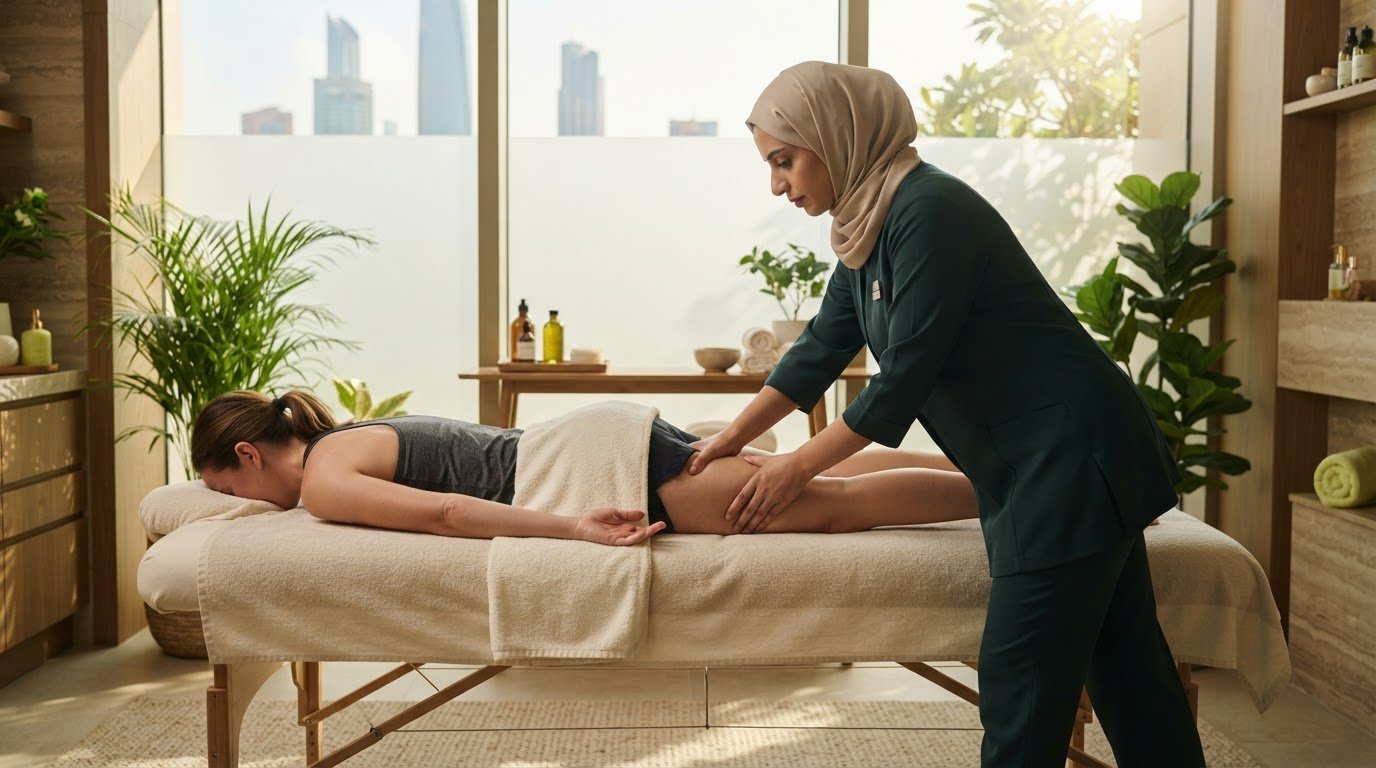
What if the tightness along your outer thigh isn’t coming from a “tight” IT band? If discomfort around your hip or knee is interrupting runs, training, or everyday movement, it’s natural to wonder whether sports massage will help or provide only short-term relief. This guide to sports massage for IT band tightness Al Zahiyah explains what massage may support, where its limits lie, and when to consider clinical assessment.
The iliotibial band is a strong strip of connective tissue. Massage should not be described as a way to stretch or permanently loosen it. Skilled, symptom-led work may support comfort in surrounding tissues, but persistent or worsening pain may need assessment to explore what is contributing to it.
Below, you’ll find practical guidance on common causes of outer-thigh and knee symptoms, what to expect from sports massage, and how to choose a next step. Pranah Ayurvedic Medical Center on Hamdan Street in Abu Dhabi offers sports massage and clinical pain management, bringing Ayurvedic knowledge together with modern medical precision for people in Al Zahiyah seeking therapeutic care.
Key Takeaways
- Outer-thigh or knee tightness is a symptom, not proof that the IT band itself is shortened.
- Sports massage may support comfort in surrounding areas, but it does not directly lengthen the band or resolve every cause of pain.
- Compare massage, adjustments to aggravating activity, and clinical assessment in light of your symptoms and goals.
- Before a session, share your activity patterns, previous injuries, and any changes in symptoms. Agree on a comfortable level of pressure.
- Pranah Ayurvedic Medical Center offers sports massage and therapeutic care on Hamdan Street in Abu Dhabi for people searching in Al Zahiyah.
What IT band tightness near Al Zahiyah may mean
A pulling sensation along the outer thigh can feel as though a taut band is restricting movement. That description is useful, but it does not identify the tissue involved. The iliotibial band, often called the IT band, is a strong strip of connective tissue that runs from the hip region down the outside of the thigh towards the knee. Discomfort along this route can have different contributing factors, so the sensation alone cannot confirm a specific condition.
Where the iliotibial band runs and what people mean by tightness
Near the hip, the IT band is connected with the tensor fasciae latae and gluteal muscles. These structures contribute to movement around the hip and thigh, but no single muscle or tissue explains everyone’s symptoms. People may use “tightness” to describe pulling, pressure, tenderness, or a restricted feeling, even when there is no evidence that the band itself is shortened.
Outer-knee symptoms may become noticeable during repetitive activity, such as running, or after a change in training. That pattern can be associated with iliotibial band syndrome, but other explanations are possible. The overview of Iliotibial band syndrome describes typical symptoms and mechanisms. It can provide background, but it cannot diagnose your symptoms.
Outer-thigh or outer-knee discomfort is a symptom pattern, not proof of a confirmed IT band condition.
When outer-knee symptoms deserve closer attention
Mild discomfort that appears with exercise and settles when activity eases is different from pain that persists, worsens, or affects ordinary movement. Notice when symptoms begin, which activities bring them on, and whether they change after you stop. These details can help a qualified health professional understand your experience, but your running history, pain location, or an at-home test cannot establish a diagnosis on its own.
Seek professional assessment if symptoms keep returning, interfere with training or daily activities, or do not improve after sensible adjustments to aggravating activity. Severe pain, significant swelling, pain following trauma, or difficulty bearing weight are warning signs that warrant prompt medical attention. Do not try to massage through intense or unexplained pain.
For anyone searching for sports massage for IT band tightness Al Zahiyah, this distinction matters. Massage may be one part of symptom-led care, but persistent or concerning symptoms should be understood before relying on hands-on treatment. Assessment can help distinguish a familiar tight feeling from signs that need closer clinical attention.
How sports massage may fit care for IT band tightness
Sports massage can be one component of care when discomfort around the outer thigh or knee affects movement. Hands-on work addresses soft tissues around the area and may support relaxation and a sense of ease. Its role is supportive, not automatically corrective: working on nearby tissues is different from directly lengthening the iliotibial band, and massage cannot determine what is causing pain.
What a symptom-led sports massage can address
A considered session starts with a conversation. The practitioner needs to understand where you feel discomfort, which activities bring it on, how it affects movement, and what you hope to gain from treatment. That context helps guide attention to surrounding hip and thigh tissues without assuming one structure is responsible. Pressure and intensity should suit your comfort and presentation, rather than test how much discomfort you can tolerate.
For example, someone who notices an ache after a run may have different needs from someone whose symptoms also affect walking or sitting. Explain what you notice, and speak up if pressure feels sharp, unpleasant, or makes your symptoms worse. More force is not automatically more effective.
What sports massage cannot promise
The IT band is not a rope that can simply be “released” or stretched into a lasting solution through massage. A session may feel soothing, but responses differ and relief may be temporary. Massage alone may not address factors associated with recurring discomfort, such as training demands, movement patterns, or another source of pain. If the problem continues or worsens, consider the broader picture rather than repeatedly working directly over a sore spot.
Evidence-aware care means being clear about these limits. The Harvard University website provides institutional information, but it is not a specific clinical review of massage for IT band symptoms. In practical terms, massage may support comfort, while persistent symptoms may need assessment of your wider presentation and activity. No hands-on approach should be treated as a guaranteed cure or a way to prevent every recurrence.
If you’re considering sports massage for IT band tightness Al Zahiyah, treat it as one part of a wider plan. Notice how symptoms respond during and after care, including whether ordinary movement feels easier or discomfort returns with activity. If pain persists, worsens, or limits function, seek clinical assessment to explore the cause and suitable next steps.
Pranah Ayurvedic Medical Center on Hamdan Street in Abu Dhabi offers sports massage as part of its therapeutic care, bringing classical Ayurvedic knowledge together with modern medical precision. Explore the centre’s sports massage and therapeutic care as an option for symptom-led support.
Sports massage, self-care, or assessment: comparing options in Al Zahiyah
There is no single best next step for every outer-thigh or knee symptom. Your choice depends on how the discomfort behaves, what support you want, and whether anything suggests a need for clinical assessment. Use this comparison to understand the options, not to diagnose the cause yourself.
| Option | Purpose | Limits |
|---|---|---|
| Sports massage | Hands-on support for comfort and relaxation in the areas around the hip and thigh. | Doesn’t confirm a diagnosis or guarantee lasting relief. |
| Training adjustments | Reduce or modify activities that seem to aggravate symptoms, while observing how movement feels. | May not be enough if symptoms persist, worsen, or have another cause. |
| Clinical assessment | Explore symptoms and function to consider possible causes and appropriate care. | Massage may still be one supportive option, but assessment itself is not a hands-on treatment. |
When massage may be a reasonable next step
Sports massage may suit someone seeking hands-on support for comfort, provided symptoms are manageable and massage is appropriate to their overall health context. Be clear about your goal: you may want to feel more at ease around the hip and thigh, rather than expect a therapist to “release” or lengthen the IT band. Before treatment, share your symptom location, activity patterns, comfort level, and relevant health history. Pranah Ayurvedic Medical Center offers sports massage as part of its therapeutic services.
For context on the centre’s wider approach, its Ayurvedic pain relief guide and deep tissue massage guide can help explain related care options. Choose an approach based on your needs, not just the name of a technique. A massage session should remain comfortable and responsive to your feedback.
When assessment should take priority
Arrange clinical assessment before treating the issue as routine tightness if symptoms are severe, unexplained, worsening, or limiting ordinary function. Assessment can consider whether the source may involve structures or factors beyond the IT band, rather than focusing only on the place that hurts. If warning signs such as those described earlier are present, seek prompt medical attention.
Reducing or modifying an aggravating activity may be a sensible step while you observe your response, but there is no single schedule or training adjustment that suits everyone. For a local search for sports massage for IT band tightness Al Zahiyah, weigh massage, activity changes, and assessment according to your symptoms. Pranah Ayurvedic Medical Center is on Hamdan Street in Abu Dhabi and combines classical Ayurvedic knowledge with modern medical precision in its care.
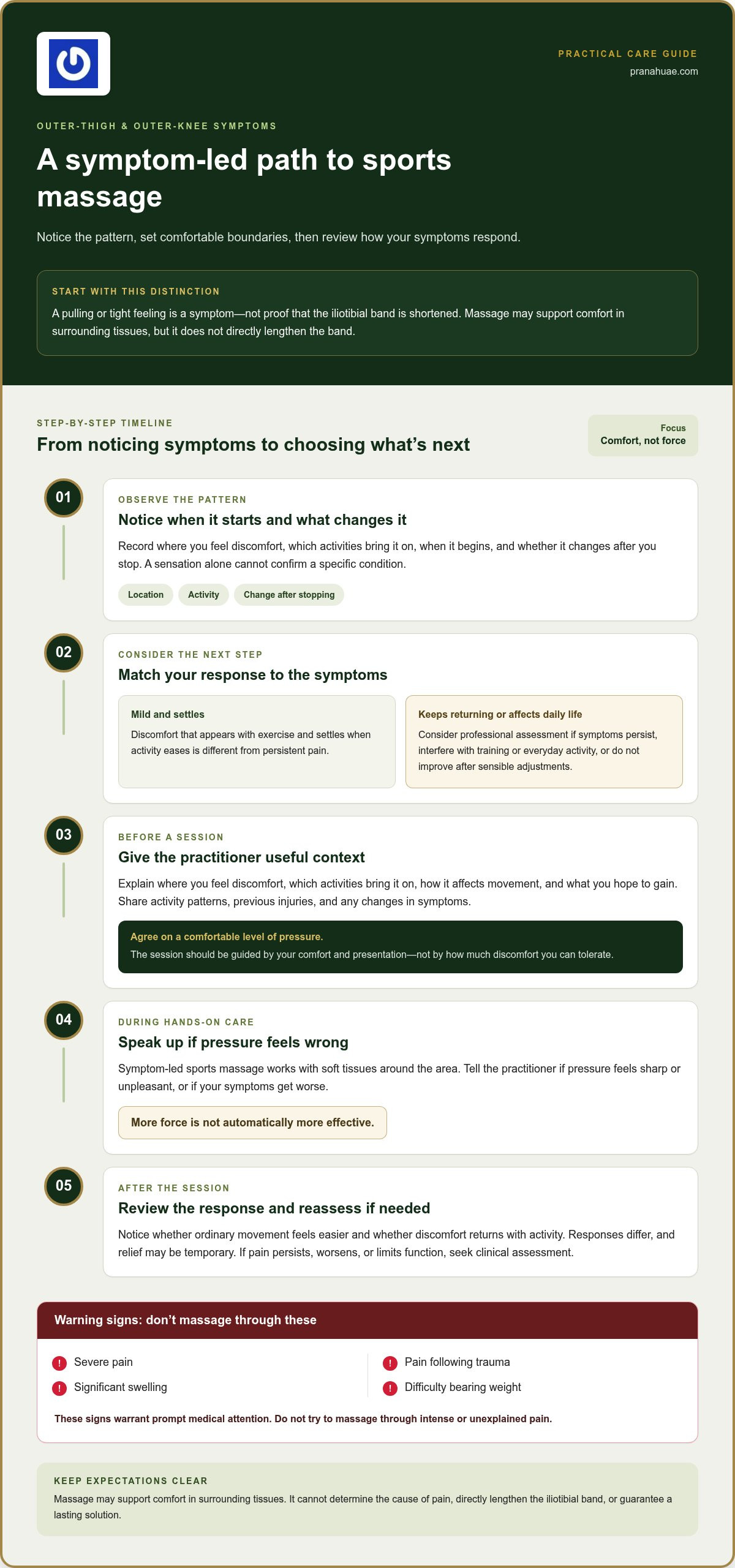
Practical steps before and after sports massage for IT band symptoms
A little preparation can make a sports massage session more considered and comfortable. You do not need to arrive with a diagnosis. Instead, describe what you have noticed and help the practitioner understand your priorities. Use this sequence to guide the conversation and pay attention to how your body responds.
- Describe your symptoms. Point out where you feel discomfort and explain when it began, what seems to bring it on, and how it affects movement. Mention recent changes, including any new areas of discomfort.
- Share relevant context. Describe your usual activity, recent changes in running or training, and any previous injury or assessment that may be relevant. Include health information that could affect how hands-on care feels or what is appropriate for you.
- Discuss your goals. Explain what you hope massage may support, such as easing local tension or feeling more comfortable during everyday movement. Clear expectations keep the focus on supportive care, not a promise to cure the underlying cause.
- Agree on comfort and communicate. Talk about pressure and comfort before treatment begins. During the session, speak up if a sensation feels sharp, too intense, or makes symptoms worse. You do not need to tolerate pain to make massage effective.
- Observe your response. Afterward, notice how the area feels at rest and during ordinary movement. Record any meaningful change, including increased discomfort, and consider it alongside your symptoms over time rather than treating one session as a definitive test.
Return to activity according to how you feel, not a guaranteed timetable. If movement feels comfortable, ease back in line with your symptoms. If an activity brings the discomfort back, consider modifying it rather than pushing through. Massage alone cannot determine the full cause of recurring pain, so ongoing symptoms may call for clinical assessment.
New or worsening symptoms warrant reassessment. If pain becomes significantly worse after treatment, limits your function, or changes in a concerning way, seek appropriate clinical advice instead of relying on further hands-on care alone. Severe or unexplained symptoms also deserve prompt attention.
For people considering sports massage for IT band tightness Al Zahiyah, sharing your symptom history and agreeing on comfortable pressure can make treatment more purposeful. Pranah Ayurvedic Medical Center on Hamdan Street in Abu Dhabi offers sports massage within its therapeutic services, combining classical Ayurvedic knowledge with modern medical precision.
Explore sports massage care at Pranah as one considered step in your recovery planning.
Finding sports massage for IT band tightness near Al Zahiyah
For people in Al Zahiyah, Pranah Ayurvedic Medical Center is located on Hamdan Street in Abu Dhabi and offers sports massage and clinical pain management. The centre brings these services together with an approach that combines classical Ayurvedic knowledge and modern medical precision. Its care is operated by qualified Ayurvedic doctors.
Choosing a next step is easier when you know what you want it to do. Sports massage may provide hands-on support and comfort, while ongoing or function-limiting symptoms may call for clinical assessment. These approaches have different roles. The location of discomfort, or a preference for massage, does not confirm that the IT band is the source.
What Pranah’s local care brings to the decision
Pranah’s Hamdan Street location makes its sports massage and clinical pain management services accessible to people searching from Al Zahiyah. Its Ayurvedic and modern clinical approach provides a setting for discussing therapeutic care without promising a particular outcome. Start by describing your symptoms clearly and explaining what you hope treatment may support.
Before choosing massage, consider what you want help with, how symptoms affect movement, and whether they are changing. If symptoms persist, worsen, or substantially limit your activities, clinical assessment may be a more appropriate priority than relying on massage alone.
Taking the next step from Al Zahiyah
Prepare a brief summary of your concern: where you feel discomfort, when it began, which activities affect it, and whether you have had a previous injury or assessment. Then identify a realistic goal, such as exploring hands-on support for comfort or understanding whether your symptoms need closer attention. This gives you a clearer starting point for discussing care.
If you’re searching for sports massage for IT band tightness Al Zahiyah, Pranah’s sports massage service can be part of symptom-led care. Keep expectations measured: massage may support comfort, but it does not establish a diagnosis or guarantee that recurring symptoms will resolve. Share relevant health context and changes in your symptoms so the discussion can focus on your needs.
Take a calm, informed next step. Explore Pranah’s services and consider how sports massage or clinical pain management may fit your goals.
Choose a thoughtful next step for your recovery
Your next step does not need to be a quick fix. Let your symptoms guide the decision: consider what you want support with, how movement feels, and whether discomfort is changing or limiting your routine. If you’re exploring sports massage for IT band tightness Al Zahiyah, treat massage as one possible part of care, not a promise that the band itself will be loosened or recurring pain will disappear.
Before arranging treatment, clarify your goals and note any changes you want to discuss. If symptoms are severe, worsening, or interfering with everyday function, prioritise appropriate clinical advice. A considered choice can help you move forward with realistic expectations.
When you’re ready to explore a supportive care option, explore sports massage and therapeutic care at Pranah. Take the next step at a pace that feels right for you.
Frequently Asked Questions
Is sports massage for IT band tightness supposed to hurt?
No. A session may involve noticeable pressure, but sharp, intense, or escalating pain is not something you need to tolerate. For sports massage for IT band tightness Al Zahiyah, tell the practitioner promptly if pressure feels uncomfortable and ask for it to be reduced or stopped. Your feedback helps keep the session within your comfort level. Pain during massage is not proof that the treatment is working or that a particular tissue needs more force.
Can I run after a sports massage for IT band tightness?
Possibly, but let your symptoms guide the decision rather than assuming you must run or rest for a set period. First notice how walking and ordinary movement feel. If the outer knee feels more sensitive or your stride is affected, postpone the run and avoid pushing through pain. If you do run and discomfort increases, stop and reassess. Persistent or recurring pain is a reason to seek clinical guidance before resuming harder training.
How long can soreness last after a sports massage?
Some people notice mild tenderness after hands-on work, but its duration and intensity can vary with individual sensitivity and the pressure used. A mild, settling sensation is different from increasing pain, marked swelling, or difficulty moving. Notice whether discomfort is easing or worsening, and avoid repeatedly pressing or massaging a sore area to test it. If soreness is severe, keeps increasing, or interferes with daily activity, seek appropriate clinical advice.
What should I wear to a sports massage appointment?
Choose comfortable clothing that is easy to change out of and allows you to move without restriction. You do not need special sportswear for the appointment. The practitioner can explain what needs to be accessible for the areas being treated and respect your comfort and privacy throughout. If you have concerns about clothing, modesty, or positioning, mention them before treatment begins so your preferences can be discussed.
How often should I get sports massage for IT band tightness?
There is no single suitable schedule for everyone, and frequent sessions should not replace understanding why symptoms keep returning. The decision can depend on your comfort, how symptoms respond after care, activity demands, and any clinical advice you have received. Track changes between sessions, including whether discomfort returns during a particular run or workout. If symptoms persist despite adjustments or progressively limit activity, arrange an assessment rather than simply increasing massage frequency.
Can IT band tightness return after sports massage?
Yes, symptoms can return. Massage may offer temporary comfort, but it does not necessarily address every factor contributing to discomfort, such as a training change or another source of pain. If tightness reappears, note when it happens and what activity came before it. That information can help guide your next step. Recurring symptoms may call for a broader plan rather than relying on massage alone or assuming the IT band needs repeated direct treatment.
What happens if my outer-knee pain gets worse after massage?
Stop massaging the area and seek appropriate clinical advice if pain becomes notably worse, persists, or affects walking or other daily activities. Severe pain, substantial swelling, pain after an injury, or difficulty bearing weight calls for prompt medical attention. Do not try to “work through” worsening symptoms with stronger pressure or a run. A clinician can assess possible causes beyond the area that feels sore and advise on suitable care.