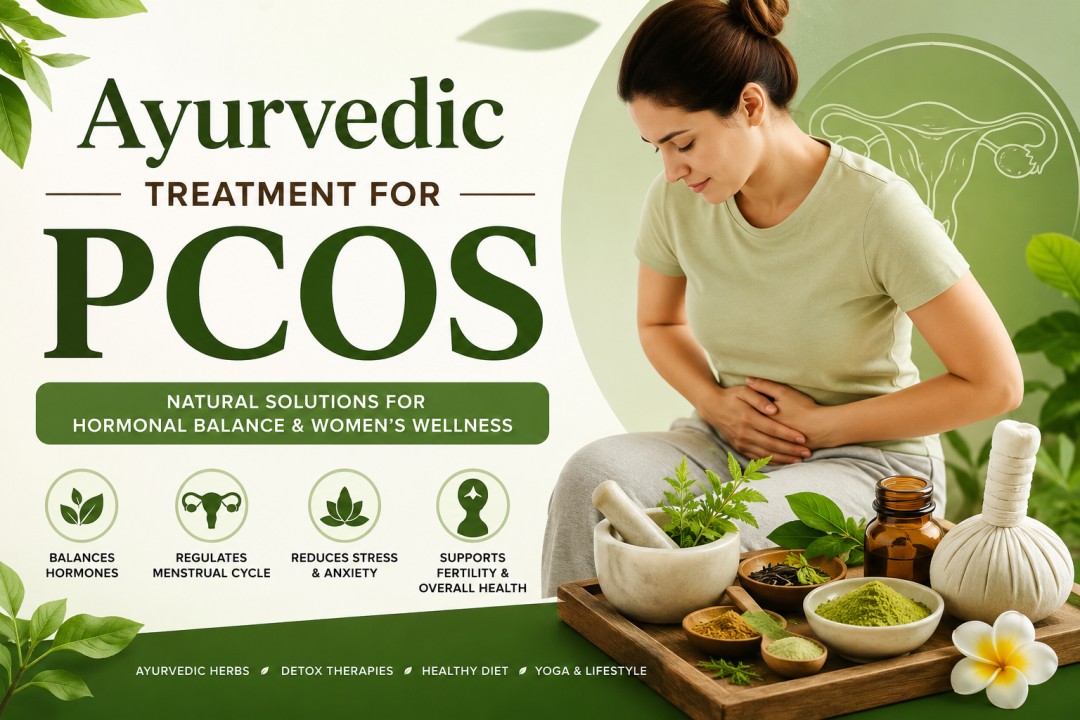
Polycystic Ovary Syndrome (PCOS) is one of the most common hormonal disorders affecting women of reproductive age. Millions of women experience symptoms such as irregular menstrual cycles, weight gain, acne, excessive facial hair, infertility, and emotional stress due to PCOS. While conventional medicine often focuses on managing symptoms through medications, Ayurveda offers a holistic approach that addresses the root cause of the condition.
Ayurvedic Treatment for PCOS combines herbal medicines, personalized dietary recommendations, detoxification therapies, stress management, and lifestyle modifications to restore hormonal balance naturally. Rather than simply suppressing symptoms, Ayurveda aims to improve overall health by balancing the body’s doshas and supporting reproductive wellness.
In this comprehensive guide, you’ll learn how Ayurveda explains PCOS, its causes, symptoms, effective treatments, dietary recommendations, herbal remedies, yoga practices, and preventive measures for long-term hormonal health.
Understanding PCOS
Polycystic Ovary Syndrome is a hormonal imbalance where the ovaries produce excessive androgens (male hormones). This hormonal disturbance affects ovulation and may result in multiple small cysts developing on the ovaries.
Common symptoms include:
- Irregular or missed periods
- Excess facial and body hair
- Acne and oily skin
- Weight gain
- Difficulty losing weight
- Hair thinning
- Fertility issues
- Mood swings
- Fatigue
- Dark patches on the skin
- Insulin resistance
Every woman experiences PCOS differently, making personalized treatment essential.
How Ayurveda Views PCOS
Unlike modern medicine, Ayurveda does not classify PCOS as a single disease. Instead, it considers it the result of an imbalance among the body’s three doshas:
- Vata Dosha
- Pitta Dosha
- Kapha Dosha
Most PCOS cases involve aggravated Kapha and Vata along with impaired digestion (Agni) and toxin accumulation (Ama).
Ayurveda believes poor digestion leads to toxin buildup, which blocks the body’s channels (Srotas). This blockage affects hormone production, ovarian function, metabolism, and menstrual health.
Therefore, treatment focuses on:
- Balancing hormones
- Improving digestion
- Detoxifying the body
- Enhancing metabolism
- Supporting healthy ovulation
- Restoring reproductive tissue
Common Causes of PCOS According to Ayurveda
Several lifestyle and dietary habits contribute to dosha imbalance.
Poor Diet
Frequent consumption of:
- Processed foods
- Sugary drinks
- Refined flour
- Fried foods
- Excess dairy
- Fast food
can weaken digestion and increase toxin accumulation.
Sedentary Lifestyle
Lack of physical activity slows metabolism, promotes weight gain, and worsens insulin resistance.
Chronic Stress
Mental stress increases cortisol levels, which directly affect hormonal balance and menstrual regularity.
Poor Sleep
Irregular sleeping habits disrupt endocrine function and metabolic health.
Weak Digestive Fire
Ayurveda emphasizes that weakened digestion is one of the primary causes of hormonal imbalance.
Symptoms Addressed by Ayurvedic Treatment
Ayurvedic therapies aim to improve:
- Irregular menstruation
- Delayed ovulation
- Weight gain
- Acne
- Facial hair
- Hair fall
- Insulin resistance
- Mood disorders
- Fertility
- Chronic fatigue
Ayurvedic Diagnosis
An Ayurvedic practitioner evaluates:
- Pulse diagnosis (Nadi Pariksha)
- Digestive strength
- Menstrual history
- Sleep quality
- Stress levels
- Body constitution (Prakriti)
- Tongue examination
- Lifestyle habits
Treatment is individualized rather than standardized.
Ayurvedic Treatment for PCOS
Treatment generally combines multiple therapies.
1. Detoxification (Panchakarma)
Panchakarma helps remove toxins from the body and restore hormonal balance.
Common procedures include:
- Abhyanga (oil massage)
- Swedana (herbal steam)
- Virechana (therapeutic purgation)
- Basti (medicated enema)
- Nasya therapy
These treatments improve circulation, metabolism, and reproductive health.
Women seeking holistic wellness often combine these therapies with services at a detox ayurvedic centre in abu dhabi as part of a personalized Ayurvedic treatment plan.
2. Herbal Medicines
Ayurvedic herbs support hormonal balance naturally.
Common herbs include:
Ashoka
Supports menstrual regularity and uterine health.
Shatavari
Known as one of Ayurveda’s best female reproductive tonics.
Benefits include:
- Hormonal balance
- Fertility support
- Improved ovulation
- Menstrual regulation
Guduchi
Boosts immunity and reduces inflammation.
Triphala
Improves digestion and detoxification.
Turmeric
Powerful anti-inflammatory herb supporting insulin sensitivity.
Cinnamon
Helps regulate blood sugar levels.
Fenugreek
Improves metabolism and insulin resistance.
Note: Herbal medicines should only be taken under qualified Ayurvedic supervision.
Diet for PCOS in Ayurveda
Food plays a central role in healing.
Recommended foods include:
Whole Grains
- Millet
- Barley
- Brown rice
- Oats
- Quinoa
Fresh Vegetables
Especially:
- Spinach
- Broccoli
- Bitter gourd
- Bottle gourd
- Pumpkin
- Carrots
Fruits
Choose low-glycemic fruits such as:
- Apple
- Pear
- Guava
- Berries
- Pomegranate
Healthy Proteins
Include:
- Lentils
- Chickpeas
- Green gram
- Tofu
- Paneer in moderation
Healthy Fats
Consume:
- Sesame seeds
- Flax seeds
- Almonds
- Walnuts
- Pumpkin seeds
Foods to Avoid
Limit or avoid:
- White sugar
- Soft drinks
- Bakery products
- Fried foods
- Processed snacks
- Excess dairy
- Refined flour
- Packaged juices
- Alcohol
- Excess caffeine
Daily Lifestyle Recommendations
Ayurveda emphasizes routine.
Maintain:
- Early morning wake-up
- Regular meal timings
- Daily exercise
- Proper hydration
- Meditation
- Quality sleep
- Stress reduction
Consistency is more important than perfection.
Yoga for PCOS
Yoga supports hormone regulation and reduces stress.
Helpful poses include:
Butterfly Pose
Improves pelvic circulation.
Cobra Pose
Stimulates reproductive organs.
Bridge Pose
Supports endocrine glands.
Child’s Pose
Reduces stress.
Cat-Cow Stretch
Improves blood flow to pelvic organs.
Surya Namaskar
Enhances metabolism and weight management.
Practice yoga 30–45 minutes daily.
Pranayama Techniques
Breathing exercises improve hormonal health.
Recommended practices:
- Anulom Vilom
- Bhramari
- Kapalabhati (under supervision)
- Deep diaphragmatic breathing
Weight Management Through Ayurveda
Even modest weight loss may improve:
- Ovulation
- Fertility
- Menstrual cycles
- Insulin sensitivity
Ayurveda encourages gradual, sustainable weight management through balanced nutrition and daily activity rather than restrictive dieting.
Can Ayurveda Improve Fertility in PCOS?
Many women with PCOS experience challenges conceiving due to irregular ovulation.
Ayurveda focuses on:
- Restoring ovulation
- Improving uterine health
- Balancing hormones
- Reducing inflammation
- Supporting healthy egg quality
When combined with a healthy lifestyle, many women experience improved reproductive wellness over time. Individual results vary, and fertility care should always involve appropriate medical evaluation when needed.
Managing Stress Naturally
Stress significantly impacts hormone production.
Daily stress-management practices include:
- Meditation
- Gentle yoga
- Nature walks
- Journaling
- Listening to calming music
- Digital detox
- Adequate sleep
Reducing stress supports better endocrine function and overall well-being.
Benefits of Ayurvedic Treatment for PCOS
Potential benefits include:
- Improved menstrual regularity
- Better hormonal balance
- Enhanced digestion
- Reduced toxin accumulation
- Healthy weight management
- Improved skin health
- Reduced acne
- Better energy levels
- Improved emotional well-being
- Enhanced fertility support
- Better metabolic health
Preventing PCOS Flare-Ups
Long-term management involves healthy habits.
Tips include:
- Eat freshly prepared meals
- Avoid overeating
- Exercise regularly
- Sleep 7–8 hours
- Manage stress effectively
- Stay hydrated
- Avoid excessive sugar
- Maintain a healthy body weight
- Follow seasonal Ayurvedic routines
- Schedule regular health check-ups
Conclusion
PCOS is a complex hormonal condition that affects many aspects of a woman’s health, but it can often be managed effectively with a comprehensive approach. Ayurveda focuses on identifying and addressing the underlying imbalances through individualized herbal support, nourishing nutrition, detoxification therapies, yoga, stress management, and healthy daily routines.
Rather than targeting symptoms alone, Ayurvedic Treatment for PCOS seeks to restore balance across the body and mind, promoting healthier menstrual cycles, improved metabolism, and enhanced reproductive wellness. Combined with regular medical follow-up and consistent lifestyle habits, Ayurveda can be a valuable part of a long-term PCOS management strategy, helping women move toward better hormonal health and an improved quality of life.