
Could Ayurvedic care support chronic pain while you continue your existing medical treatment? When pain affects rest, movement, or daily routines, it’s understandable to look for additional support and reliable guidance. Ayurvedic healing for chronic pain may be considered as complementary care, but it isn’t a guaranteed cure or a substitute for necessary medical care.
This guide explains what Ayurvedic care may involve, what the available evidence can and can’t tell us, and how to discuss complementary treatment with your clinicians. It covers approaches such as Abhyangam, Kizhi, Kativasthi, and Panchakarma, plus practical ways to prepare for a discussion. Sharing information about your medicines and supplements is important when considering any complementary treatment.
In Abu Dhabi, Pranah Ayurvedic Medical Center on Hamdan Street provides clinical pain relief and Ayurvedic therapies under the care of qualified Ayurvedic doctors. This guide can help you consider whether individualized care may fit alongside your wider pain-management plan, without promising a quick fix.
Key Takeaways
- Understand how chronic pain can affect daily life and how Ayurvedic care may fit alongside a wider care plan.
- Learn how Ayurveda individualizes support and how its traditional concepts differ from biomedical diagnoses.
- Consider the evidence and limitations of Ayurvedic healing for chronic pain without treating it as a replacement for necessary medical care.
- Prepare for a discussion by noting your symptoms, timeline, current care, medicines, and priorities.
- Explore clinical pain relief and complementary care with the qualified Ayurvedic doctors at Pranah on Hamdan Street in Abu Dhabi.
What chronic pain means, and where Ayurvedic healing may fit
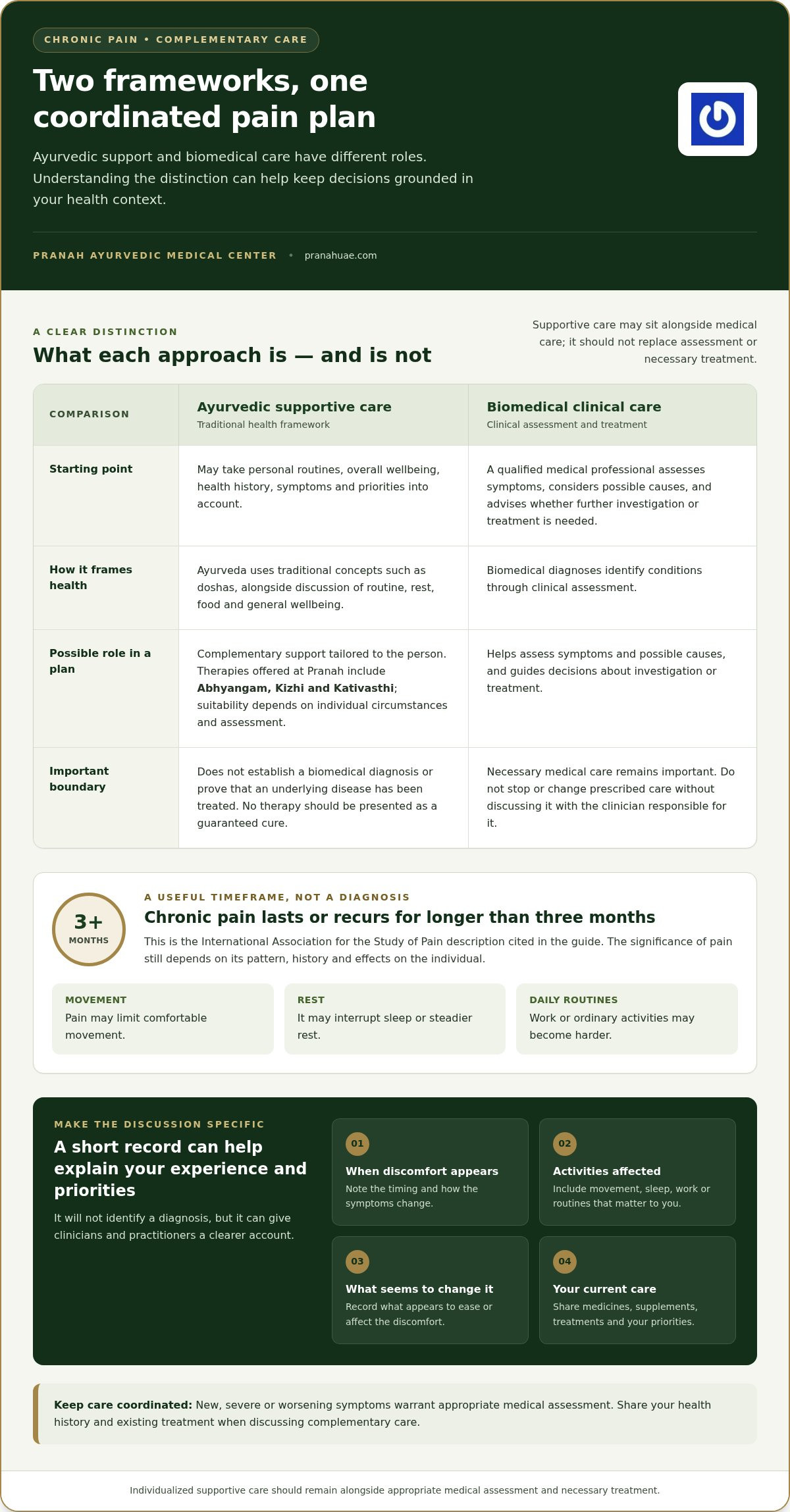
Pain that continues after an injury has healed, or persists without a clear starting event, can be difficult to understand. The International Association for the Study of Pain describes chronic pain as pain that lasts or recurs for longer than three months. This timeframe is a useful guide, not a diagnosis. The significance of pain depends on its pattern, history, and effects on the individual.
Persistent pain can limit movement, interrupt sleep, affect mood, or make work and ordinary routines harder. Some people experience several of these effects; others may notice only one. Pain is personal, and a symptom alone cannot reveal its cause. A qualified medical professional can assess symptoms, consider possible causes, and advise whether further investigation or treatment is needed.
How persistent pain can affect everyday life
For example, recurring back discomfort might make it hard for one person to sit through a workday, while another person’s pain mainly disrupts sleep. Neither experience is a template for everyone. A useful discussion about supportive care starts with what you want help managing, such as comfortable movement, steadier rest, or taking part in a valued activity.
Keep a brief record of when discomfort appears, which activities are affected, and what seems to change it. This won’t identify a diagnosis, but it can give clinicians and practitioners a clearer account of your experience and priorities.
What “Ayurvedic healing” should, and should not, promise
Ayurveda is a traditional health system with its own concepts and practices. Within this framework, care may take a person’s routines and overall wellbeing into account. These traditional ideas are distinct from biomedical diagnoses, which identify conditions through clinical assessment. Ayurvedic healing for chronic pain may be considered as complementary support, not as proof that a particular disease has been identified or treated.
Supportive Ayurvedic care may complement a medical plan, but it cannot diagnose or establish treatment for an underlying cause. General wellbeing support is different from demonstrated ability to treat a specific disease. No therapy should be presented as a guaranteed cure, and prescribed care shouldn’t be stopped or changed without discussion with the clinician responsible for it.
New, severe, or worsening symptoms warrant appropriate medical assessment rather than an assumption that they are part of an existing pain pattern. This keeps Ayurvedic care in its proper role: a considered option to explore alongside necessary medical care, with your history and goals guiding the discussion.
How Ayurvedic care approaches chronic pain through individualized support
Ayurvedic care is traditionally tailored to the person rather than chosen from one treatment menu for everyone with pain. A practitioner may consider where discomfort occurs, how it changes through the day, relevant health history, current care, daily routines, and your priorities. One person may focus on easier movement; another may want support in maintaining a manageable routine. These details help shape a discussion, but they don’t establish a biomedical diagnosis.
Ayurvedic principles and the whole-person perspective
Ayurvedic theory describes health through traditional concepts such as the doshas, understood as functional qualities that influence how the body and mind are considered within this system. A practitioner may also discuss routine, rest, food, and general wellbeing. These ideas belong to Ayurveda’s traditional framework; they aren’t biomedical findings about the cause of an individual’s pain.
This wider perspective can help structure a conversation about supportive care and personal aims. It shouldn’t be used to explain away symptoms, replace clinical assessment, or promise a particular outcome. Your medical history and existing treatment remain important context.
Where therapies such as Abhyangam, Kizhi, and Kativasthi may be discussed
Pranah offers Abhyangam, Kizhi, and Kativasthi among its Ayurvedic therapies. These are options to discuss as part of individualized care, not universal solutions for every pain condition. A practitioner considers suitability in light of your circumstances and assessment. For related context on massage in an Ayurvedic setting, see deep tissue massage in Abu Dhabi.
The name of a therapy alone doesn’t determine whether it is appropriate. Relevant considerations may include the affected area, how symptoms behave, other health conditions, sensitivity to touch, and treatments already in progress. Sharing these details helps the practitioner discuss possible options and their limits. If you’re uncertain about a symptom or an existing diagnosis, your medical clinician remains an important part of the conversation.
The right Ayurvedic approach depends on your health context, symptoms, and goals, not on assuming that one therapy suits everyone. Individual assessment keeps Ayurvedic healing for chronic pain grounded in your circumstances rather than broad promises. It also supports clear communication between you, your Ayurvedic practitioner, and clinicians involved in your ongoing care.
At Pranah Ayurvedic Medical Center on Hamdan Street in Abu Dhabi, qualified Ayurvedic doctors provide clinical pain relief and relevant therapies. You can explore Ayurvedic care at Pranah as one part of a considered care plan.
Evidence, limitations, and the concern that Ayurvedic care replaces medical treatment
It’s reasonable to ask whether complementary care could distract from finding the cause of pain or lead someone to stop treatment that is helping. Ayurvedic care should not replace a needed diagnosis, prescribed treatment, or follow-up with a medical clinician. Its role, if appropriate, is complementary. Keep distinct a therapy’s place in a traditional system, its possible supportive role, and evidence that it effectively treats a specific condition.
What research can and cannot establish
Research on Ayurveda and chronic pain is limited. Studies may examine different conditions, therapies, and treatment combinations, so a finding about one approach cannot be applied to all Ayurvedic care or every pain diagnosis. Small study sizes, varied protocols, and limited long-term data also make it difficult to draw firm conclusions about effectiveness across chronic pain conditions.
Traditional use explains why a therapy is considered within Ayurveda, but it doesn’t by itself demonstrate clinical benefit. A possible supportive role, such as helping someone engage with a care routine, is not the same as proven treatment of an underlying disease. Consider claims in relation to the specific condition and current medical guidance. A broader Ayurvedic pain relief guide can provide related context, but it shouldn’t replace clinical advice tailored to a diagnosis.
Using complementary care alongside medical support
Keep the clinicians involved in your care informed about complementary therapies, medicines, supplements, and changes in symptoms. This gives them a fuller picture when reviewing your treatment and helps surface questions about interactions or suitability. Don’t stop, change, or delay prescribed treatment without speaking with the prescriber. If you’re considering a therapy for a diagnosed condition, discuss its intended role and how you’ll assess whether it is useful.
Different situations call for different kinds of care. These options work alongside one another, rather than serving as substitutes:
| Need | Appropriate focus |
|---|---|
| Ongoing, familiar symptoms | Discuss supportive care while continuing the medical plan and monitoring day-to-day function. |
| Unexplained or persistent pain | Seek medical assessment to consider possible causes and appropriate treatment. |
| Sudden, severe, or rapidly worsening symptoms | Seek timely medical attention rather than waiting to see whether complementary care helps. |
Ayurvedic healing for chronic pain is best considered with measured expectations: it may be explored as complementary support, while diagnosis and evidence-based medical care remain central to decisions about an underlying condition.
How to prepare for Ayurvedic chronic-pain care and assess your response
A little preparation can make a care discussion more focused. Bring a clear account of what you experience, what support you already receive, and what you hope to change. You don’t need to arrive with a diagnosis or a perfect record. Consider Ayurvedic healing for chronic pain in the context of your wider care, not in isolation.
Information to bring to an initial discussion
Before the discussion, gather details that help explain your situation. Brief notes are enough; you don’t need to remember everything during the appointment. Include questions and previous experiences with complementary therapies, even if they seemed minor or made no difference.
- Describe the symptoms. Note where the pain occurs, what it feels like, and whether it changes during the day or with particular activities.
- Record the timeline. Write down when it began, whether it has changed, and any events you associate with its onset, without assuming those events explain the cause.
- Explain the impact. Identify affected activities, such as walking, sitting, sleeping, working, or household tasks. Mention what you can still do comfortably.
- Summarize current care. List existing diagnoses, clinicians involved, treatments, and relevant advice you’ve received.
- Bring a complete medicine list and your priorities. Include prescription medicines, non-prescription products, and supplements. Note what matters most to you and any questions about possible complementary support.
This information helps a practitioner understand your circumstances and discuss whether an approach is suitable. It can also highlight questions to raise with the clinician managing your medical care.
Tracking changes without expecting a guaranteed timeline
A brief journal can help you notice patterns, but it isn’t a diagnostic tool. Record symptoms alongside sleep, movement, and meaningful daily activities. For example, note whether getting dressed, preparing a meal, or completing a work task felt easier, harder, or unchanged. These practical observations can add useful context beyond a single pain rating.
Keep entries simple and consistent enough to compare. A difficult day doesn’t necessarily mean care has failed, and a better day doesn’t prove that a therapy caused the change. Symptoms can fluctuate for different reasons. Look for patterns over time and discuss them with the appropriate practitioners rather than drawing medical conclusions alone.
Review progress and treatment decisions with the practitioners involved in your care. Share unexpected changes, new concerns, or difficulty with an approach promptly. There is no guaranteed improvement timeline. Decisions should reflect your response, priorities, and overall health context, not an assumed schedule.
To discuss individualized Ayurvedic care in Abu Dhabi, arrange a discussion with Pranah’s Ayurvedic doctors.
Exploring Ayurvedic chronic-pain support with Pranah in Abu Dhabi
For readers considering traditional care in Abu Dhabi, Pranah Ayurvedic Medical Center is located on Hamdan Street and is operated by qualified Ayurvedic doctors. Clinical pain relief is among the center’s services, alongside Ayurvedic therapies such as Abhyangam, Kizhi, Kativasthi, and Panchakarma. These options can be part of a considered conversation about complementary support, not a promise that a particular therapy will resolve pain.
What an individualized conversation can help clarify
A thoughtful discussion can bring the different parts of your health picture together. Explain your health history, the care you currently receive, your concerns about complementary therapies, and the changes you hope to work toward. This makes your priorities clear and provides relevant context for discussing possible support.
Suitability can’t be inferred from a search term, a pain location, or a single symptom. The same area of discomfort may have different causes and implications for different people. A discussion of Ayurvedic care should account for your circumstances, while diagnosis and treatment decisions for an underlying medical condition remain part of appropriate clinical care.
It can help to say what would feel meaningful in daily life. That might be greater comfort during a routine activity or understanding whether a complementary approach fits with existing care. These are discussion goals, not guarantees of improvement. Be open about ongoing treatment and follow advice from the clinicians responsible for your medical care. Complementary support should not lead you to stop, change, or delay prescribed treatment without speaking with its prescriber.
A local next step for readers in Abu Dhabi
Pranah’s Hamdan Street location offers a local setting for people exploring Ayurvedic support. The center’s qualified Ayurvedic doctors provide clinical pain relief and relevant therapies, including Abhyangam, Kizhi, and Kativasthi. Which approach, if any, is suitable requires individualized consideration, not a conclusion based on a general description of chronic pain.
Before a discussion, gather relevant medical information and note the questions you most want answered. You might ask how a proposed therapy would fit alongside your current care, what supportive role it is intended to have, and how to share concerns if your symptoms change. Clear expectations make for a more useful conversation and help keep Ayurvedic care within an appropriate role.
Ayurvedic healing for chronic pain is best explored with patience and realistic expectations. No single approach is right for everyone, and complementary care should remain part of a wider health plan rather than stand in for needed medical assessment or treatment. If you’re in Abu Dhabi, a discussion with the qualified Ayurvedic doctors at Pranah can help you consider whether this support fits your goals.
Choose a next step that feels considered
A considered approach to pain care can start with a practical question: what would you like to do more comfortably? That priority can focus a discussion, keep expectations realistic, and make changes easier to evaluate over time. Ayurvedic healing for chronic pain is best explored as individualized complementary support, with existing medical care continuing to guide decisions about diagnosis and treatment.
You don’t need to have every answer before taking a next step. Bring your questions, describe what matters in daily life, and allow room for an informed discussion about whether Ayurvedic care may fit your circumstances. A thoughtful choice respects both your experience of pain and the wider clinical picture.
If you’re ready to explore an individualized discussion in Abu Dhabi, contact Pranah to explore Ayurvedic care at the Hamdan Street center.
Frequently Asked Questions
Can Ayurvedic treatment interact with pain medication?
Yes, some Ayurvedic herbs or supplements may interact with medicines, so disclose everything you take before starting them. Bring product names or packaging, including non-prescription pain relief and supplements, and share the information with both your prescribing clinician and Ayurvedic practitioner. Don’t assume a product is risk-free because it’s described as natural. If you notice an unexpected reaction after starting something, seek advice from a healthcare professional.
Should I stop my prescribed treatment before trying Ayurvedic care?
No, don’t stop or alter prescribed treatment on your own. Abruptly changing some medicines can cause problems or allow the condition being treated to worsen. Before adding an Ayurvedic therapy or product, discuss your plans with the clinician who manages that treatment. For example, ask how to proceed if you’re considering a supplement while taking regular medication. Keep follow-up appointments so any care changes are reviewed appropriately.
Can Ayurvedic care help with fibromyalgia?
It may be explored as complementary support, but there’s no basis for promising that Ayurvedic care treats or cures fibromyalgia. The condition can affect people differently, so any discussion should account for your diagnosis, symptoms, existing care, and priorities. Ask your clinician whether a proposed approach fits your circumstances, especially if it involves herbs or supplements. Continue the care plan agreed with your medical team while you assess complementary options.
How long does Ayurvedic treatment take to show results for chronic pain?
There’s no reliable, universal timeframe for results. Response can differ according to the person, the pain condition, and the approach being considered, and current evidence doesn’t support a guaranteed schedule. Before beginning, agree on practical ways to review your experience, such as whether a valued daily activity feels more manageable. If symptoms worsen or you have concerns, discuss them with the relevant healthcare professional rather than waiting for a presumed treatment timeline.
Can I continue exercising while receiving Ayurvedic care for chronic pain?
Often, people can remain active, but the right level depends on their health, symptoms, and any advice from their clinician. Don’t treat an Ayurvedic therapy as a reason to push through new or sharply increased pain. If you have an established activity plan, discuss changes with the professional who guided it and tell your Ayurvedic practitioner about it. Pause and seek medical advice if activity brings concerning new symptoms.
What symptoms mean chronic pain needs urgent medical attention?
Seek urgent medical assessment for sudden severe pain, rapidly worsening symptoms, new weakness or numbness, difficulty breathing, or chest pain. New loss of bladder or bowel control, or numbness around the groin or inner thighs, also needs prompt evaluation. These signs can have causes that require timely assessment and shouldn’t be managed by waiting for a complementary therapy. If you’re uncertain about a sudden change, contact local emergency medical services or seek urgent care.