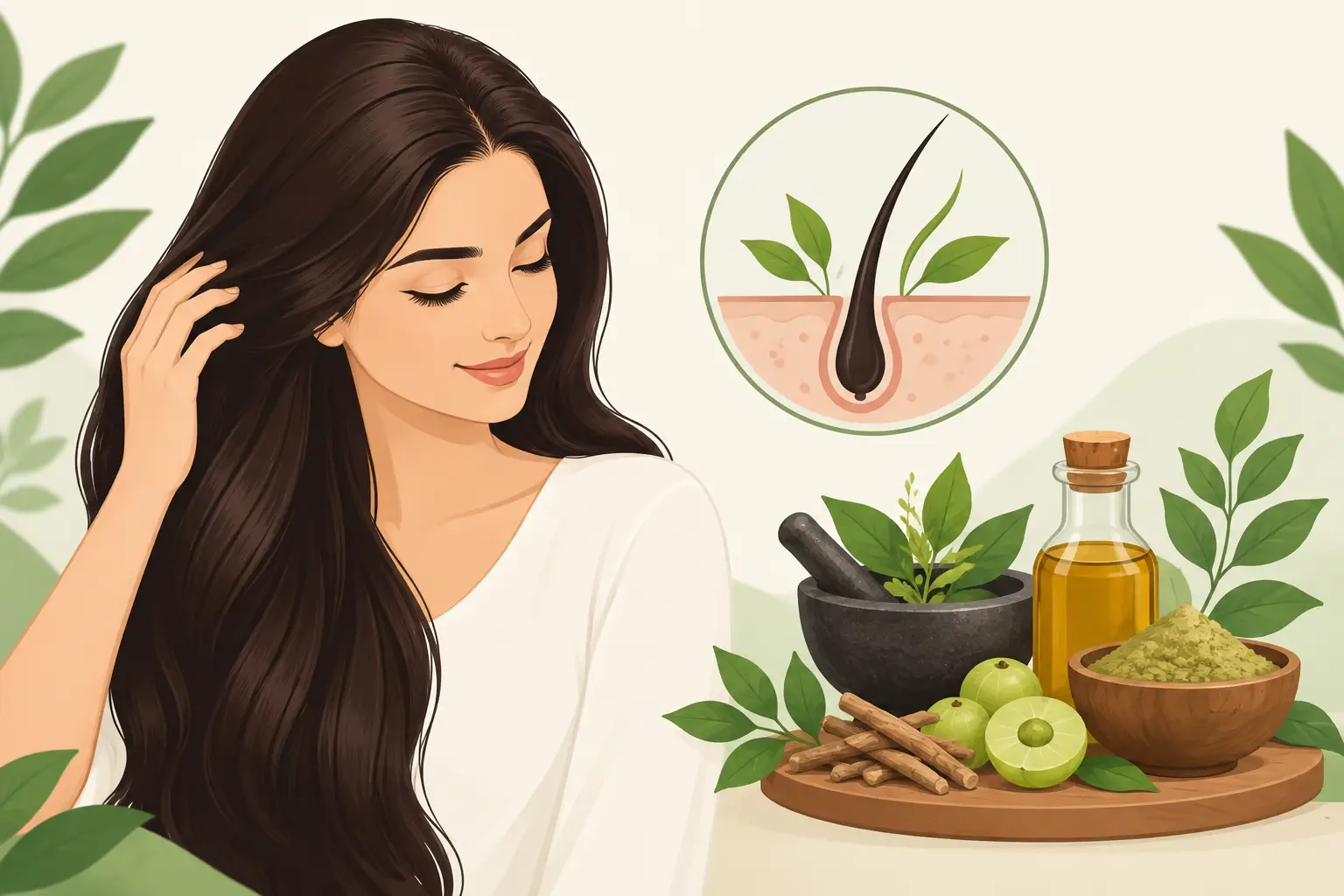
Hair fall often becomes most noticeable in the quiet moments: strands collecting on a pillow, a widening part, or more hair than usual in the shower drain. While it may be tempting to reach immediately for a new shampoo or oil, ayurvedic hair fall treatment begins with a more meaningful question: why is the hair weakening in the first place?
In Ayurveda, the scalp and hair are not treated in isolation. Hair quality is understood as a reflection of nourishment, digestion, stress levels, sleep, hormonal balance, and the body’s individual constitution, or Prakriti. This perspective is especially relevant for people whose hair concerns began alongside fatigue, disrupted sleep, work pressure, dietary changes, illness, or a major life transition.
Why Hair Fall Needs a Root-Cause Assessment
It is normal to shed some hair every day. The concern arises when shedding becomes sudden, persistent, visibly excessive, or is accompanied by thinning, itchiness, flaking, scalp sensitivity, or changes in hair texture. There is no single Ayurvedic protocol that suits every person because the underlying pattern can differ significantly.
From an Ayurvedic perspective, excess heat and Pitta imbalance may contribute to premature graying, scalp irritation, or fine, fragile hair. Elevated Vata can be associated with dryness, brittle strands, irregular meals, anxiety, and disturbed sleep. Kapha-related imbalance may present with an oily scalp, buildup, heaviness, or sluggish circulation. These patterns can overlap, which is why a qualified Ayurvedic doctor evaluates the whole person rather than simply matching a symptom to a product.
A thorough consultation may explore the timing of hair loss, daily diet, bowel regularity, sleep, stress, menstrual or postpartum changes, medications, medical history, and scalp condition. This allows treatment to focus on the factors most likely to be affecting the hair cycle and scalp environment.
Hair fall can also be linked with conditions that need conventional medical evaluation, including thyroid disorders, iron deficiency, nutritional deficiencies, autoimmune conditions, hormonal changes, or certain medications. Sudden patchy hair loss, scalp pain, scarring, or rapidly worsening shedding should be assessed promptly by a physician or dermatologist. Ayurveda can be a valuable part of supportive care, but responsible treatment begins with accurate diagnosis.
Ayurvedic Hair Fall Treatment Is Individualized
A physician-led Ayurvedic plan may combine internal support, external therapies, dietary guidance, and lifestyle correction. The goal is not to offer a quick cosmetic cover-up. It is to create conditions that support a healthier scalp, stronger hair care habits, and better overall balance.
Herbal scalp and hair therapies
Traditional Ayurvedic hair care uses carefully selected herbal oils, pastes, and cleansing preparations according to the person’s constitution and scalp condition. Oils are chosen not merely for fragrance or shine, but for their intended qualities – cooling, nourishing, grounding, cleansing, or calming.
A therapeutic head massage with warm medicated oil may help nourish dry scalp tissue, relax muscular tension around the head and neck, and support a calming daily rhythm. However, more oil is not always better. A person with an inflamed, very oily, or dandruff-prone scalp may need a different approach than someone with pronounced dryness and breakage.
At Pranah Ayurvedic Medical Center, head-focused therapies may be considered within a personalized plan, including treatments such as Thalapothichil and Thalam when clinically appropriate. These Kerala-rooted therapies use traditional herbal applications to support scalp comfort, relaxation, and whole-body balance under professional guidance.
Internal nourishment and digestion
Ayurveda places strong emphasis on digestion because even a nutrient-rich diet may not provide its full benefit when digestion is irregular. Skipping meals, eating at inconsistent times, relying heavily on processed foods, or following restrictive diets without guidance can affect energy, tissue nourishment, and hair health.
An Ayurvedic doctor may recommend food choices that suit your constitution, season, digestion, and current symptoms. For some people, the focus may be on regular, warm, nourishing meals and adequate protein. For others, reducing very spicy, fried, overly acidic, or highly processed foods may help address excess internal heat or digestive discomfort.
Herbal formulations may also be prescribed after consultation. These are selected based on the individual clinical picture and should not be self-prescribed simply because an herb is popular online. Natural remedies can still interact with medicines, be unsuitable during pregnancy, or be inappropriate for certain health conditions.
Stress, sleep, and nervous system care
Persistent stress does not stay confined to the mind. It can disrupt sleep, appetite, digestion, and the hair growth cycle. Working professionals may recognize this pattern after periods of prolonged deadlines, travel, emotional strain, or insufficient rest.
Ayurvedic care often includes practical routines that settle Vata and reduce the accumulated effects of stress. This may involve a more consistent sleep schedule, gentle evening self-massage where appropriate, breathing practices, reduced screen exposure before bed, and therapies such as Abhyangam or Shirodhara when recommended by the doctor. These therapies are not replacements for medical care, but they can support relaxation and restorative routines that matter for long-term wellness.
What a Personalized Treatment Plan May Include
The right plan depends on the cause, the severity of shedding, and the client’s overall health. A medically guided program may include a combination of consultation, scalp examination, herbal oil application, head therapies, dietary corrections, stress management, and follow-up assessment.
For some clients, a period of gentle scalp nourishment and regular sleep may be the priority. For others, digestive support, management of scalp buildup, or broader cleansing therapies may be appropriate. Panchakarma-based protocols are not routine beauty treatments; they are structured clinical therapies and should be recommended only after proper assessment.
Consistency matters more than intensity. A single head massage may feel deeply relaxing, but meaningful changes in hair shedding and scalp condition usually require a steady plan over time. Hair grows in cycles, so the visible effects of improved habits and guided care can take several months to emerge.
Everyday Habits That Protect Hair Health
A treatment plan is strengthened by what happens between appointments. Avoid very hot water on the scalp, tight hairstyles that pull at the roots, frequent heat styling, and harsh chemical processing when hair is already fragile. Choose a gentle cleansing routine suited to your scalp type, and avoid aggressive scratching or repeated brushing of wet hair.
Nutrition also deserves attention. Hair needs adequate overall nourishment, including protein and key vitamins and minerals. If shedding is significant, it is wise to speak with a healthcare professional about whether blood work is needed rather than relying on supplements without a clear reason.
Small routines can be powerful: eating meals on time, hydrating adequately, allowing room for rest, and responding early when scalp discomfort appears. These practices support not only hair care, but the broader vitality Ayurveda seeks to restore.
When to Seek Professional Guidance
Professional assessment is particularly valuable if hair fall continues for more than a few months, begins after childbirth or illness, occurs with irregular periods or weight changes, or is accompanied by persistent dandruff, redness, tenderness, or patchy loss. The sooner the underlying contributors are identified, the more focused the care plan can be.
A qualified Ayurvedic doctor can help distinguish between a temporary stress-related shedding phase and a pattern that needs broader investigation. This avoids the common cycle of trying multiple oils, supplements, and salon treatments without understanding what the scalp and body actually need.
Healthy hair is rarely the result of one product. It is often the visible outcome of steady nourishment, a calmer nervous system, thoughtful scalp care, and treatment that respects your individual constitution. A consultation can be the first restorative step toward caring for the roots beneath the strands.