Can a detox meaningfully support metabolism, or is “resetting” it an oversimplification? With cleanse claims, fasting advice, and weight-loss promises competing for attention, it helps to separate traditional wellness concepts from measurable health outcomes. Ayurvedic detox for metabolism is an individualized approach, not a guaranteed shortcut to changing how the body uses energy.
This guide explains what Ayurvedic detox may involve and how traditional ideas about digestion and balance differ from the biomedical meaning of metabolism. It also covers practical questions to consider before a cleanse or Panchakarma, including how fasting, herbal supplements, existing health conditions, and current care may affect what is suitable for you.
At Pranah Ayurvedic Medical Center on Hamdan Street in Abu Dhabi, qualified Ayurvedic doctors offer consultations and metabolic balance services. These provide a setting to discuss your health and lifestyle, understand the options, and consider next steps without expecting a quick fix or a particular result.
Key Takeaways
- Ayurvedic detox for metabolism is an individualized wellness framework, not a proven metabolic reset or a promise of weight loss.
- Ayurveda’s concept of Agni relates to digestion, while metabolism describes the body’s processes for using and storing energy.
- Before considering fasting, supplements, or Panchakarma, clarify your goals and share your health history and current medicines during clinical assessment.
- Detox does not guarantee fat loss, removal of unspecified toxins, or lasting metabolic change.
- Pranah’s consultations and metabolic balance programs can help put wellness choices in the context of your health and lifestyle.
What Does Ayurvedic Detox for Metabolism Mean?
Ayurvedic detox for metabolism is a traditional, individualized wellness framework, not a proven way to reset metabolic function. It may involve considering a person’s routines, digestion, and broader sense of balance. That perspective can inform a wellness conversation, but it is not the same as a biomedical diagnosis or a demonstrated method for changing metabolism.
In everyday terms, metabolism is the set of processes through which the body converts food and drink into energy and uses or stores that energy. It supports essential functions as well as movement and activity. Body weight is not controlled by one simple metabolic switch: energy balance reflects interacting influences, and a person’s weight or symptoms alone cannot explain every process involved.
How metabolism is used in modern health discussions
In modern healthcare, “metabolism” can refer broadly to the body’s energy-related processes or more specifically to measurable factors, such as blood glucose and blood lipids. These measures provide different information. They are not interchangeable with a general claim that someone has a “slow metabolism.” MedlinePlus describes metabolism as the chemical processes in cells that change food into energy and building materials MedlinePlus overview of metabolism.
Health conditions, medicines, activity, sleep, and eating patterns can all matter when a clinician assesses metabolic health. A cleanse should not be treated as a universal solution or as a substitute for evaluating persistent symptoms, diagnosed conditions, or relevant test results. A person’s weight is only one part of the picture.
What Ayurvedic detox language refers to
Ayurveda is a traditional system with concepts such as constitution and balance. These ideas can help frame an individualized discussion of wellbeing, but they are not laboratory measurements or direct equivalents of biomedical terms. An Ayurvedic assessment of constitution, for example, does not diagnose a metabolic condition, and traditional language about balance should not be presented as a measured metabolic rate.
In this context, “detox” may describe a traditional approach to supporting wellbeing rather than a specific, clinically verified process of removing unspecified toxins. A meaningful claim about a toxin would identify the substance and explain how its presence and removal are measured. Without that clarity, detox language alone does not establish that the body has been cleansed or that metabolism has changed.
Setting realistic expectations
Panchakarma is one of the Ayurvedic treatments offered at Pranah. Its place in someone’s wellness care is best considered in an individualized clinical conversation, rather than assumed to be appropriate for everyone. Suitability depends on a person’s health context and goals.
Supportive care and guaranteed outcomes are not the same. No detox approach should be assumed to produce rapid fat loss, remove unspecified toxins, or create lasting metabolic change. Start by clarifying what you hope to address, distinguishing traditional concepts from biomedical measures, and discussing relevant health considerations before pursuing a restrictive cleanse or treatment.
How Ayurvedic Principles Relate to Metabolism
Ayurveda and modern medicine can both invite attention to everyday patterns, but they describe health through different frameworks. Keeping that distinction clear lets you explore traditional ideas without mistaking them for clinical measurements or established explanations of metabolic function.
Agni and digestion: a traditional framework
Agni is an Ayurvedic concept associated with digestion and the way food is understood to be processed within the traditional framework. Its interpretation belongs to Ayurveda’s own system of ideas. Agni is not a clinical measurement of metabolic rate, and claims that “strengthening Agni” directly accelerates metabolism or treats a disease go beyond that traditional meaning.
In practice, someone may use Agni as a lens for reflecting on appetite, digestion, or eating routines, while a clinician assesses specific symptoms or measurable indicators using biomedical methods. These descriptions can sit alongside one another in a thoughtful wellness conversation, but one does not automatically verify or explain the other. A traditional assessment cannot replace appropriate evaluation of a health concern.
Individual patterns and everyday health factors
Ayurvedic approaches may consider constitution and patterns across daily life, including food choices, meal timing, sleep, movement, and stress. These can help shape a personalized discussion, but they are not a formula in which one constitution or dosha determines someone’s metabolic health. Two people with similar routines may still have different health needs, histories, and clinical measurements.
Modern health assessments also consider context. Activity, sleep, diet, health conditions, and medicines can be relevant when interpreting metabolic indicators, so a single habit or symptom rarely tells the whole story. A change in energy or weight, for example, is useful context to discuss, but does not establish a particular metabolic diagnosis by itself. Weight trends and laboratory results, when relevant, are measurable information; Ayurvedic concepts offer a different kind of interpretation.
Climate can shape practical routines without serving as a treatment explanation. In Abu Dhabi’s hot conditions, pay attention to regular fluid intake and how activity fits into the day. Hydration is a general wellbeing consideration, not evidence that a detox has altered metabolism. Anyone with a medical condition or specific fluid guidance should follow advice tailored to their care.
A grounded Ayurvedic detox for metabolism conversation can hold both perspectives carefully: traditional concepts may help describe an individual’s experience, while biomedical questions require appropriate clinical assessment. Before a consultation, note your usual meal patterns, sleep, movement, stress, and any relevant test results. A consultation at Pranah’s Ayurvedic medical center can help frame questions around your health and lifestyle.
Ayurvedic Detox, Fasting, and Metabolic Reset: What Is Realistic?
“Detox” can describe very different things, from a traditional Ayurvedic approach to a restrictive cleanse promoted as a fast route to weight loss. The distinction matters. An individualized wellness plan begins with a person’s health context and goals. An unsupervised cleanse may involve fasting, supplements, or major dietary changes without considering how they fit that person’s needs.
Detox claims versus realistic expectations
Ayurvedic detox may be considered within a traditional wellness framework, but its purpose should not be confused with proof of a specific biomedical effect. Personal goals, such as feeling more settled in daily routines, differ from measurable clinical outcomes, such as changes in laboratory results or sustained weight trends. A brief drop on the scale alone does not show that metabolism has improved.
No detox should be described as a guaranteed metabolic reset. Detox does not guarantee fat loss, removal of unspecified toxins, or lasting metabolic change. Judge claims by the outcome being discussed and how it could be assessed, rather than by the word “cleanse” alone.
Traditional purpose: An Ayurvedic detox approach may be framed around supporting individual wellbeing within traditional principles.
Evidence limits: That purpose does not, by itself, establish toxin removal or a measurable change in metabolic function.
Safety considerations: Fasting, herbal products, and substantial diet changes can affect people differently. Suitability depends on personal health circumstances and should be considered with appropriate clinical guidance.
This comparison separates intention from evidence. An individualized program should make room for questions about what you hope to address, what outcomes can reasonably be followed, and what uncertainties remain. It should not rely on dramatic promises or treat short-term changes as proof of lasting benefit.
When extra clinical caution matters
Individualized clinical review is especially important during pregnancy, for people with diabetes or chronic illness, and for anyone taking prescription medicines. Fasting or changing food intake may affect health needs, while herbal products can raise questions about suitability and interactions. Share your diagnoses, medicines, and any previous reactions as part of the assessment.
Do not stop prescribed medicines or replace established medical care with a cleanse, supplement, or Ayurvedic treatment. If a health condition is being managed, discuss changes to care with the clinician responsible for it. This is not a reason to dismiss traditional wellness practices; it is a way to consider them responsibly alongside existing care.
If you are considering Ayurvedic detox for metabolism, discuss your goal and health context before deciding whether fasting, herbs, or Panchakarma is appropriate. Pranah’s Ayurvedic consultations provide a setting to discuss individual wellness questions without treating a particular outcome as guaranteed.
How to Approach Ayurvedic Detox Safely in Abu Dhabi
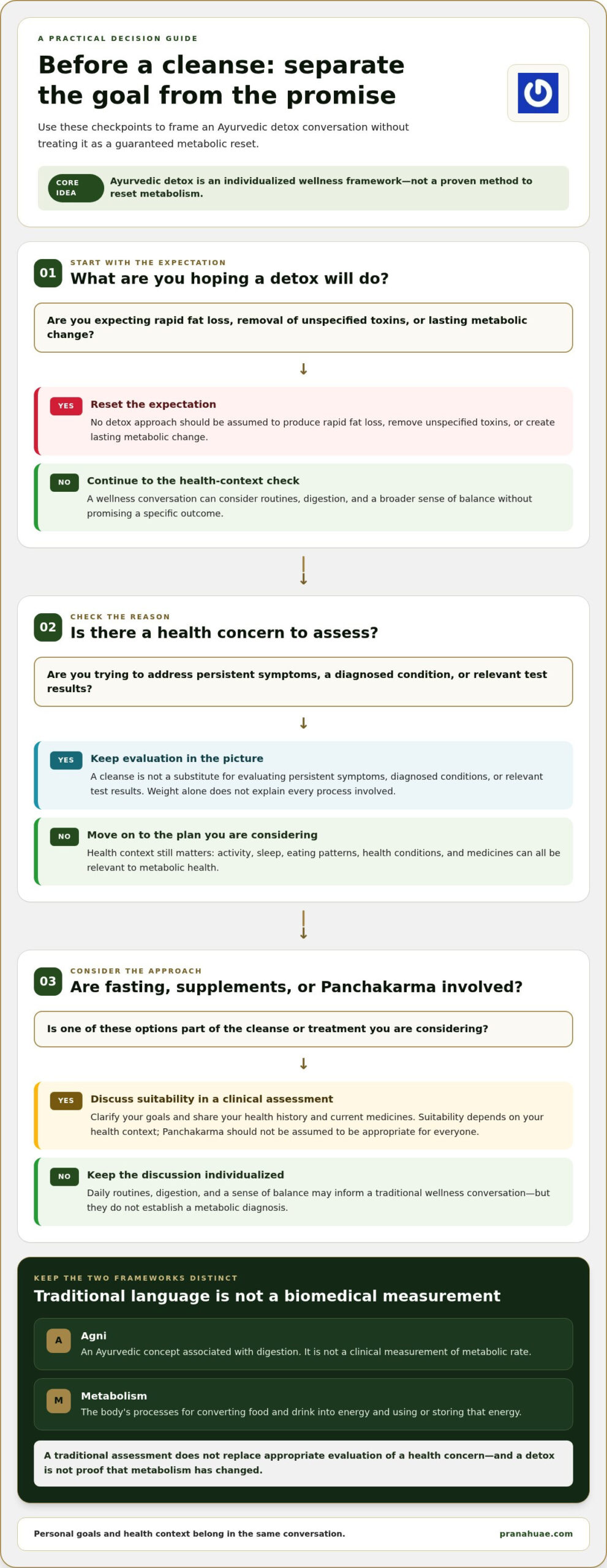
A careful decision starts with your circumstances, not a standard cleanse or promised result. Use these steps to structure a conversation about Ayurvedic detox for metabolism and keep any wellness plan connected to your health needs and daily life.
- Clarify your goals. Be specific about what you hope to address, such as building steadier routines or discussing digestion concerns. Separate personal wellbeing aims from clinical goals that require assessment.
- Review your health context. Share relevant diagnoses, prescription and non-prescription medicines, dietary restrictions, current medical care, and any previous reactions to supplements or treatments. This helps the practitioner consider your situation as a whole.
- Discuss the options. Ask what a suggested approach is intended to support, what it involves, and what is known or uncertain about its effects. Discuss fasting, herbs, or substantial dietary changes before starting them, especially if you have an ongoing health condition or take medication.
- Agree on realistic measures. Decide together what progress could reasonably look like. This may include sustainable routines or personal wellbeing observations. Clinical indicators, such as laboratory results, require appropriate assessment and interpretation.
- Reassess thoughtfully. Review how the approach fits your health and routine, and discuss concerns or unwanted reactions. Do not continue a plan simply because you expect a dramatic “detox” sensation or rapid change.
Questions to bring to an Ayurvedic consultation
Preparation makes the discussion more useful. Ask what the proposed approach is meant to support and how progress will be assessed. Bring a clear account of your health history, medicines, dietary restrictions, previous reactions, and current medical care. You can also discuss how recommendations might fit work, family, and meal routines without unnecessary restriction. In Abu Dhabi, mention your usual schedule and activity during hot weather so practical considerations, including hydration, can be discussed in context rather than prescribed as a universal rule.
Setting measures of progress beyond a quick result
Agree on indicators that make sense for your circumstances, and distinguish how you feel from what clinical measures show. You might keep notes on routines you are working to sustain, while relevant clinical results should be assessed appropriately. A short-term change in weight or energy is not, by itself, proof of lasting metabolic change. There is no universal detox schedule or promised timeline. Reassessment should follow your individual needs and the guidance agreed with your qualified Ayurvedic doctor.
At Pranah Ayurvedic Medical Center in Abu Dhabi, consultations place detox questions within an individualized discussion of health and lifestyle. Arrange an Ayurvedic consultation to explore your goals and discuss suitable next steps.
Exploring Metabolic Wellness with Pranah in Abu Dhabi
For Abu Dhabi residents considering Ayurvedic care, Pranah Ayurvedic Medical Center is located on Hamdan Street and is operated by a team of qualified Ayurvedic doctors. Consultations offer a setting to discuss health and lifestyle in an individualized way, including how traditional Ayurvedic perspectives relate to contemporary metabolic health questions.
How Pranah’s services relate to metabolic wellness
Pranah offers metabolic balance programs, lifestyle medicine, and therapeutic weight optimization. These services support an individualized wellness conversation, not a promise of weight loss or metabolic improvement. An Ayurvedic consultation can help put your goals and routines in context, while biomedical indicators and health concerns should be understood through appropriate clinical assessment.
Panchakarma is another Ayurvedic offering at Pranah. It is distinct from the center’s metabolic balance programs and should not be treated as a guaranteed way to reset metabolism. The term “detox” alone does not establish what measurable effect a treatment will have. A considered discussion can distinguish an offering’s traditional purpose from specific outcomes that require appropriate evidence and assessment.
This distinction is useful when weighing a broad wellness goal against a particular health concern. Wanting to develop more consistent routines, for example, is different from seeking help with a diagnosed condition or a change in a clinical result. Keeping those aims clear can make a consultation more focused and help ensure traditional concepts are not mistaken for biomedical measurements.
A measured next step for Abu Dhabi readers
Before pursuing a self-directed restrictive detox, consider whether a conversation with a qualified Ayurvedic doctor would help you understand your options in light of your health and lifestyle. Discuss what you hope to address, what kind of care may be relevant, and how to keep recommendations realistic. This approach makes room for individual needs rather than assuming one cleanse or plan suits everyone.
For readers exploring Ayurvedic detox for metabolism, Pranah’s consultations, Panchakarma, metabolic balance programs, and lifestyle medicine provide relevant starting points. The appropriate option depends on individual circumstances, and no particular outcome should be assumed. A steady, personalized conversation can help you consider whether Ayurvedic care fits your goals while keeping expectations grounded.
If you are in Abu Dhabi, Explore Ayurvedic care at Pranah. A consultation is a measured way to discuss your wellness aims before making changes to your routine.
Choose a Next Step That Respects Your Health
Wellness decisions are more useful when they begin with a clear personal intention rather than pressure to achieve a rapid result. Before exploring Ayurvedic detox for metabolism, consider what you want support with, what you are comfortable changing, and what you need to keep stable in your daily life. That reflection can make a consultation more focused and meaningful.
Individual guidance can help you consider traditional Ayurvedic care alongside your existing health needs, without treating one approach as a substitute for another. You do not need to arrive with every answer. A thoughtful conversation is a reasonable place to clarify your questions and decide whether a particular next step feels appropriate.
At Pranah in Abu Dhabi, you can explore these questions with qualified Ayurvedic doctors. Explore Ayurvedic care at Pranah and take a measured step toward wellness that feels considered, personal, and sustainable.
Frequently Asked Questions
Can Ayurvedic detox boost metabolism?
Not necessarily. “Boost metabolism” is often imprecise because it can refer to different processes or health measures. Ayurvedic approaches may address daily routines and wellbeing through a traditional framework, but that does not establish a measurable increase in metabolic function. Clinical assessment considers specific health information in context. If you are considering Ayurvedic detox for metabolism, discuss your goals and health circumstances with a qualified practitioner.
Is Ayurvedic detox safe for everyone?
No single detox approach is suitable for everyone. Fasting, restrictive eating, and herbal products may be inappropriate depending on a person’s health, pregnancy, or medicines. Before making significant changes, arrange an individualized clinical assessment and share relevant diagnoses and treatments. If you are already receiving care, keep that care in place: do not stop prescribed treatment or use a detox as its replacement. Suitability needs to be considered person by person.
Does Ayurvedic detox help with weight loss?
It should not be treated as a guaranteed or rapid weight-loss method. Body weight can be affected by several aspects of health and daily life, and a brief change on the scale does not demonstrate lasting metabolic improvement. If weight is one of your goals, discuss what matters to you and what measures are appropriate to follow. Ayurvedic metabolic wellness services can support an individualized discussion, but do not assume a specific amount, pace, or result.
Do I need to fast during an Ayurvedic detox?
No, fasting should not be assumed to be part of every Ayurvedic approach. Whether a dietary change is appropriate depends on your health and circumstances. Do not begin restrictive fasting on your own, particularly if you have a medical condition, take medication, are pregnant, or have a history of disordered eating. Discuss your usual eating pattern and any proposed changes with a qualified practitioner so the conversation reflects your individual needs.
Can I follow an Ayurvedic detox while taking medication?
Possibly, but discuss it with qualified clinicians before starting a detox or herbal product. Share a current list of your prescription and over-the-counter medicines, including how you take them. This helps clinicians consider proposed changes alongside your existing care. Do not pause, replace, or adjust prescribed medication on your own, even if a cleanse or supplement is described as natural. Advice about combining products and care should be specific to you.
How long does an Ayurvedic detox take to affect metabolism?
There is no universal timeline or guaranteed metabolic effect. “Affect metabolism” might refer to different outcomes, so clarify what you mean before setting expectations. A short-term shift in weight or energy does not prove a lasting physiological change. Rather than relying on a fixed-date promise, agree on realistic goals and suitable ways to assess them with a qualified practitioner. Any clinical measures should be interpreted in the context of your health.
What should I discuss before a detox consultation in Abu Dhabi?
Bring a clear account of your goals, relevant health history, current medicines, dietary restrictions, and previous reactions to treatments or supplements. Ask what the proposed care is intended to support, how progress will be assessed, and which recommendations are optional. For an appointment in Abu Dhabi, noting your usual work and meal routines can help keep the discussion practical. Guidance should be tailored to your circumstances, not assumed from a general cleanse plan.