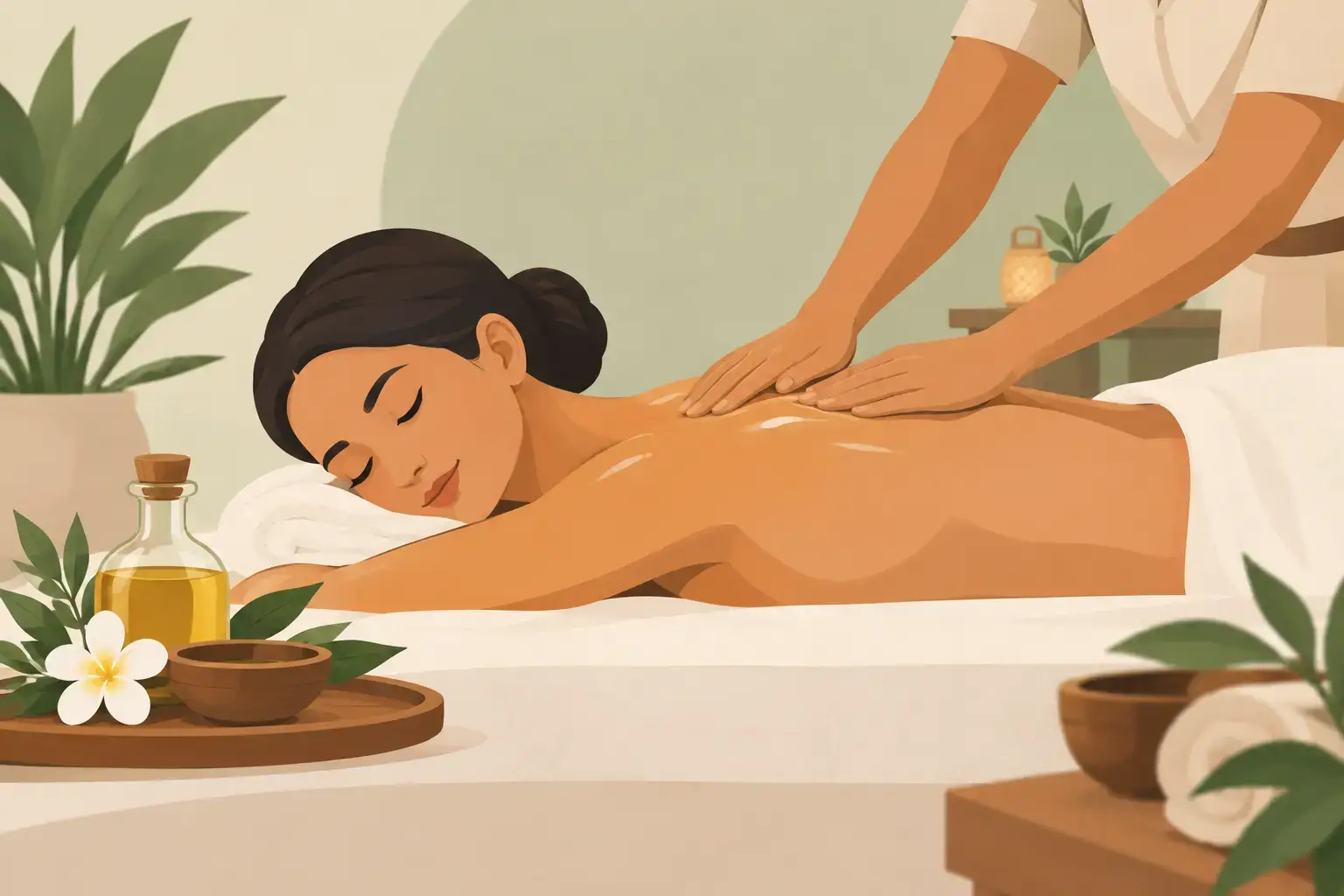
A warm herbal oil treatment can feel deeply comforting after long hours at a desk, a demanding commute, or a period of poor sleep. Yet the abhyanga massage benefits people seek go far beyond temporary relaxation. In Ayurveda, Abhyangam is a therapeutic practice chosen to support the body’s natural balance, soothe aggravated Vata, and encourage a more resilient state of mind and body.
At Pranah Ayurvedic Medical Center, Abhyangam is approached as part of a personalized care plan, not as a standardized spa massage. An Ayurvedic doctor considers your constitution, current concerns, lifestyle, digestion, sleep pattern, pain level, and skin sensitivity before recommending oils, pressure, duration, and complementary therapies.
What Is Abhyangam?
Abhyangam is the traditional Ayurvedic practice of applying warm, medicated herbal oil to the body with intentional massage strokes. The word is often used to describe a full-body oil massage, although treatment may also be adapted for a specific area such as the back, joints, head, or feet.
In a clinical Ayurvedic setting, the oil is not selected for fragrance alone. Formulations may be chosen to support concerns such as muscular stiffness, joint discomfort, dryness, fatigue, stress, or poor sleep. The therapist uses methods appropriate to the treatment goal, while the physician guides the overall protocol.
This distinction matters. A strong deep-tissue massage may be helpful for some people but unsuitable for someone with acute inflammation, high sensitivity, certain injuries, or an aggravated Vata condition. Abhyangam is intended to be responsive rather than forceful.
Abhyanga Massage Benefits for Body and Mind
The experience begins with warmth. Warm oil and measured touch can help the nervous system shift away from the constant alertness many professionals carry through the day. For people whose stress shows up as tense shoulders, restless sleep, jaw tightness, or a feeling of being physically depleted, this slower pace can be as meaningful as the massage itself.
Supports muscular comfort and mobility
Repetitive work, prolonged sitting, travel, exercise, and age-related changes can leave muscles feeling tight and joints less comfortable. Abhyangam is often used in Ayurvedic care to help ease stiffness, support soft-tissue comfort, and prepare the body for movement.
For chronic back pain, arthritis-related discomfort, or joint concerns, massage is rarely the entire answer. The right plan may include targeted therapies such as Kizhi, localized Vasti, gentle movement guidance, internal Ayurvedic support, and lifestyle correction. The benefit of medical oversight is knowing when Abhyangam fits the picture and when another approach should take priority.
Encourages circulation and healthy tissue nourishment
The rhythmic application of warm oil is traditionally valued for supporting circulation and nourishing the body’s tissues. Many clients notice that their skin feels softer and less dry after treatment, while areas affected by tension feel warmer and more at ease.
These effects can be especially welcome in air-conditioned environments and dry climates, where skin dryness and bodily fatigue are common. The immediate sensation is soothing, but consistency matters more than a single session. A physician may recommend a course of therapies based on your constitution and the nature of your concern.
Helps settle stress and support better rest
Stress is not always experienced as an emotional problem. It may appear as shallow sleep, digestive irregularity, headaches, fatigue, irritability, or persistent muscular tension. Ayurveda recognizes this close relationship between the mind, nervous system, digestion, and body tissues.
Abhyangam provides a dedicated period of stillness, warmth, and sensory calm. It may help clients feel more settled after treatment and support a healthier evening routine. When sleep disruption is longstanding, however, the care plan should look beyond massage alone. Dietary patterns, screen habits, work stress, hormonal changes, pain, and underlying medical conditions can all contribute.
Supports skin health through appropriate herbal oils
Daily exposure to heat, air conditioning, harsh cleansers, and environmental stress can compromise the skin’s comfort and appearance. Herbal oil massage can support softness and hydration, particularly when an oil is appropriate for the person’s skin type and Ayurvedic constitution.
More oil is not always better. Clients with acne-prone skin, active rashes, fungal conditions, or certain sensitivities need careful assessment. An Ayurvedic doctor can help determine whether Abhyangam, a modified local application, or another skin-focused protocol is more suitable.
Builds a restorative self-care rhythm
One of the lasting abhyanga massage benefits is that it invites a different relationship with health. Instead of waiting for exhaustion or pain to become unmanageable, regular therapeutic care creates space to notice the body earlier.
For some clients, this means weekly sessions during a period of stress or recovery. For others, a shorter course may be paired with seasonal wellness care or a Panchakarma-based program. Frequency depends on your goals, response to treatment, medical history, and practical routine.
Why Personalized Abhyangam Matters
Two people may both report neck tension and poor sleep, yet require different care. One may be experiencing overwork and nervous-system overload. Another may have a structural issue, migraine tendency, digestive disturbance, or a pattern of inflammation that requires a more specific treatment plan.
Ayurveda begins with assessment because symptoms are not treated in isolation. Your Prakriti, or individual constitution, helps guide the choice of oils and therapies. Your current imbalance, known as Vikriti, helps the physician understand what needs support now.
A personalized session may involve a full-body Abhyangam, while another person may benefit more from head therapy, Shirodhara, Nasyam, Kizhi, Pizhichil, or localized Vasti. This is why a therapeutic Ayurvedic massage should not be selected only from a menu of relaxation services. Accurate diagnosis helps protect comfort and improve the relevance of care.
What to Expect During a Session
A properly guided Abhyangam session generally starts with a consultation or a treatment review. The therapist confirms your comfort, relevant symptoms, and any changes since the last visit. Warm herbal oil is then applied using strokes and pressure suited to the prescribed protocol.
You should feel cared for, not pushed through discomfort. Communicate if the oil feels too warm, pressure is too strong, you feel dizzy, or a painful area becomes more sensitive. After treatment, it is common to feel relaxed, warm, or pleasantly tired. Giving yourself time to rest, hydrate, and avoid rushing into a demanding activity can help you receive the treatment more fully.
The precise experience varies. A rejuvenation-focused session may feel broad and deeply calming, while a pain-management protocol may be more targeted and combined with additional Ayurvedic therapies.
When Abhyangam Should Be Modified or Delayed
Abhyangam is generally a gentle therapy when prescribed appropriately, but it is not right for every situation. Treatment may need to be delayed or adapted during fever, acute infection, open wounds, severe skin irritation, active inflammation, some circulatory concerns, or immediately after certain injuries.
Pregnancy, the postpartum period, chronic illness, and medication use also call for individualized guidance. Prenatal and postnatal Ayurvedic care can be deeply supportive, but the techniques, pressure, body positioning, and oils must be selected with care. Always share your health history with the treating physician and continue appropriate medical care for diagnosed conditions.
Making the Benefits Last Beyond the Treatment Room
Abhyangam is most valuable when it becomes part of a wider return to balance. Small changes can reinforce the care: regular meals, adequate sleep, gentle movement, warm hydration, and pauses between demanding tasks. These are not rigid rules. They are practical ways to reduce the daily strain that often brings pain, fatigue, and stress back to the surface.
If your body has been asking for attention through stiffness, poor rest, dryness, or persistent tension, consider a physician-led Ayurvedic consultation. The right treatment is not simply the most relaxing one. It is the one chosen with care for your constitution, your present needs, and your path toward steadier vitality.