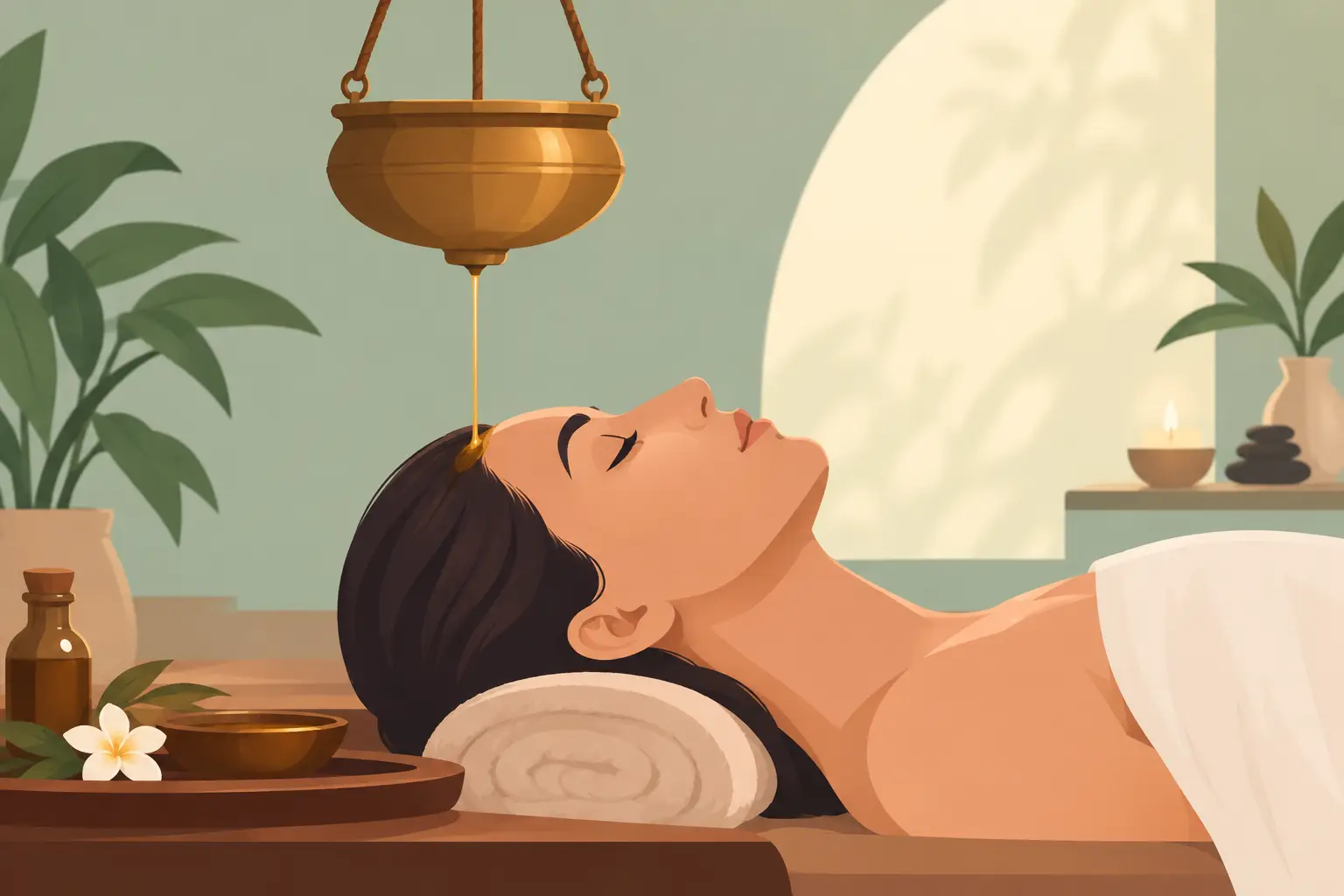
A mind that remains switched on long after work can affect far more than mood. It can disturb sleep, tighten the neck and shoulders, trigger headaches, alter digestion, and leave even a quiet evening feeling restless. Shirodhara for stress relief is a traditional Ayurvedic therapy designed for this state of mental and physical overactivity, using a gentle, continuous flow of warm herbal oil across the forehead as part of an individualized care plan.
At Pranah Ayurvedic Medical Center, Shirodhara is approached as a physician-guided therapeutic protocol, not a quick spa escape. The choice of oil, duration, supporting therapies, and frequency are considered after an Ayurvedic assessment of your constitution, current symptoms, routine, sleep, digestion, and overall health goals.
What Is Shirodhara?
The word Shirodhara comes from two Sanskrit words: shiro, meaning head, and dhara, meaning flow. During the therapy, the client rests comfortably while a trained therapist allows a steady stream of warmed medicated oil, or in some cases another Ayurvedic preparation selected by the doctor, to flow rhythmically over the forehead and scalp.
The experience is quiet and deeply still. Rather than requiring effort from the client, it creates a protected period in which external stimulation is reduced and the body is invited to settle. Many people describe a sense of heaviness leaving the head, softer facial tension, and a more restful state afterward.
In Ayurveda, persistent stress, racing thoughts, irregular sleep, and nervous exhaustion are often associated with an aggravation of Vata dosha. Vata is linked with movement, the nervous system, and change. When it becomes disturbed by long working hours, travel, skipped meals, excessive screen time, worry, or inconsistent rest, a person may feel ungrounded and depleted. Shirodhara is traditionally used to calm and nourish this pattern while supporting harmony between mind and body.
How Shirodhara for Stress Relief May Help
Stress does not present the same way in every person. One individual may feel alert but unable to sleep, while another may experience fatigue, irritability, digestive discomfort, tension headaches, or a sense of mental fog. That is why a standardized treatment is rarely the most meaningful approach.
The warmth of the oil, the repetitive flow, reduced sensory input, and unhurried therapeutic setting can encourage deep relaxation. For clients whose stress is expressed through a tense scalp, jaw clenching, tight shoulders, or restless sleep, Shirodhara may be especially restorative when prescribed alongside complementary Ayurvedic therapies and lifestyle guidance.
Its purpose is not to erase every external pressure in a single session. Work demands, caregiving, chronic pain, and disrupted routines may still need practical changes and, where appropriate, medical support from other healthcare professionals. Instead, Shirodhara can give the system a valuable opportunity to downshift, making it easier to respond to stress with greater steadiness.
For some clients, the most noticeable benefit is improved ease before bedtime. Others value the temporary quieting of repetitive thought patterns or the release of accumulated head and neck tension. Results vary according to the underlying cause of stress, the chronicity of symptoms, sleep habits, constitution, and consistency of care.
More than a relaxation treatment
A relaxation massage may feel pleasant, but medically guided Ayurveda begins with a different question: why is the stress response so persistent in the first place? An Ayurvedic doctor may consider whether irregular meals, insufficient sleep, chronic pain, digestive imbalance, hormonal changes, excessive stimulation, or a demanding schedule are contributing to the concern.
This root-cause perspective may lead to Shirodhara as a stand-alone session for restorative support, but more often it forms part of a broader plan. Abhyangam herbal oil massage may be recommended when the body feels dry, tense, or fatigued. Head therapies such as Thalam or Thalapothichil may be considered for specific head-related discomforts. Dietary rhythm, gentle movement, breathing practices, and sleep routines can also be part of the plan.
What to Expect During Your Session
Your care begins with consultation and assessment. The doctor will discuss your main concerns, health history, medications, sleep quality, digestion, energy levels, and any symptoms such as migraine, anxiety, pain, or scalp sensitivity. This helps determine whether Shirodhara is appropriate and which therapeutic oil or preparation best suits your condition.
During the session, you will lie on a treatment bed in a calm, private setting. Warm oil is poured in a controlled, consistent stream across the forehead, typically moving gently from side to side. The therapist monitors comfort throughout. Depending on the protocol, the treatment may include a head massage or be combined with a full-body Abhyangam session.
Afterward, allow time to rest. Your hair and scalp will contain oil, so it is wise to avoid scheduling a rushed meeting, strenuous workout, or hair appointment immediately afterward. Many clients prefer a quieter evening and an early bedtime after Shirodhara. Drinking water, eating a light nourishing meal if hungry, and limiting intense screen use can help preserve the sense of calm.
The number of sessions depends on the person. A single treatment can offer a restorative pause, while long-standing stress, sleep disruption, or fatigue may call for a structured series prescribed by the doctor. Lasting change is more likely when therapies are paired with realistic adjustments to daily rhythm.
Who May Benefit From a Personalized Plan?
Shirodhara may be considered for adults experiencing sustained work pressure, poor-quality sleep, mental restlessness, fatigue, tension-related head discomfort, or difficulty winding down. It can also support people who feel emotionally overstimulated after frequent travel, caregiving responsibilities, or periods of intense change.
It is not a replacement for mental health care, emergency medical care, or treatment for severe insomnia, depression, panic symptoms, or neurological concerns. If stress is accompanied by chest pain, thoughts of self-harm, severe shortness of breath, fainting, or a sudden and unusual headache, seek urgent conventional medical attention.
Ayurvedic physicians also assess when to postpone or modify treatment. Active scalp infections, fever, certain skin conditions, recent head injuries, uncontrolled medical concerns, and individual sensitivities may require a different approach. Pregnancy and postnatal care should always be guided by a qualified practitioner who understands the client’s stage of care and health history.
Making the Benefits Last Beyond the Treatment Room
The value of Shirodhara grows when the rest of the day supports the same intention. A client who receives a calming therapy but returns to late-night emails, skipped meals, and five hours of sleep may experience only limited benefit. Ayurveda recognizes routine as therapeutic in its own right.
Start with a small, repeatable change. Keep meals at more regular times, create a screen-free buffer before bed, take a short walk after work, or choose a consistent sleep and wake time on most days. These are simple practices, yet they help reduce the unpredictability that can aggravate a stressed Vata pattern.
If headaches, body pain, digestive symptoms, or sleep disturbance are part of your stress picture, mention them during consultation rather than treating them as separate problems. The body often communicates overload through several channels at once. A personalized plan can address these connections with appropriate therapies, herbal formulations when indicated, and practical lifestyle correction.
A calmer mind is not always found by pushing harder for relaxation. Sometimes it begins with receiving the right kind of care, at the right pace, with attention to the patterns your body has been carrying. A qualified Ayurvedic consultation can help determine whether Shirodhara has a meaningful place in your path toward steadier rest, renewed vitality, and natural balance.