
What if managing stress didn’t require a perfect routine, just a few steady habits that fit the life you already lead? When work, family commitments, and daily demands make it hard to slow down, finding natural stress management Abu Dhabi residents can put into practice may feel like one more task. Persistent stress can affect sleep, focus, and physical wellbeing, so it’s worth responding with care rather than waiting for life to become less busy.
This guide shares realistic ways to build moments of calm into an Abu Dhabi routine, from everyday practices to signs that you may need more support. It also explains how personalized Ayurvedic care can complement general wellbeing habits without replacing prescribed treatment or qualified mental-health care.
You’ll find practical considerations for choosing natural approaches, learn what to discuss in a consultation with a qualified Ayurvedic doctor, and see where Shirodhara fits among the therapies offered at Pranah Ayurvedic Medical Center. You’ll also learn when ongoing or severe symptoms call for support from a mental-health professional.
Key Takeaways
- Build a manageable routine around sleep, gentle movement, mindful pauses, or social connection. Start with one change that fits your day.
- Use a simple four-step plan to notice patterns, practise a habit consistently, and review whether it suits you.
- Compare self-care, personalized Ayurvedic support, and mental-health services by their purpose. They can complement one another, but none suits everyone.
- Approach natural stress management in Abu Dhabi practically, with your individual needs and everyday routine in mind.
- A consultation with a qualified Ayurvedic doctor can help you discuss your wellbeing needs and relevant options, including Shirodhara as a therapy offered at Pranah.
What Natural Stress Management Means in Everyday Abu Dhabi Life
Natural stress management uses everyday habits and appropriate wellbeing support to help you manage stress. It is not a guaranteed cure or a substitute for clinical care. In Abu Dhabi, this may mean making practical adjustments to sleep, movement, quiet pauses, and supportive relationships, while recognizing when symptoms need professional assessment.
Stress is a normal response to demands or change. It may arise during a busy work period, a challenging commute, family responsibilities, or a shift in routine. Short-term stress may ease when pressure passes or you have time to recover. The experience varies: an early meeting, a long journey across the city, or competing responsibilities at home can affect people differently.
Start with your own day rather than an idealized routine. Notice when tension tends to rise: before a deadline, after disrupted sleep, or when travel and family schedules leave little time to pause. You don’t need to label every difficult day as a problem. Look for recurring patterns and whether they affect your ability to rest, focus, or manage ordinary responsibilities. For a broad overview, see Stress Management Techniques. Your own needs and circumstances still matter.
How can everyday stress show up?
Stress may coincide with changes in sleep, concentration, mood, or physical tension. You might find it harder to settle at night, focus on a task, respond patiently, or relax tight shoulders. These experiences vary, and none proves that stress is the cause. Other health or life factors can produce similar changes, so notice when symptoms occur, how long they last, and how they affect daily life rather than self-diagnosing.
A brief note can help you spot patterns. Record the situation, how you slept, and what you noticed in your body or mood. For example, compare how you feel after a tightly scheduled day with how you feel after a day that includes a quieter break. This isn’t a test or treatment plan. It can help you describe your experience if you decide to seek guidance.
Natural support and professional care have different roles
Relaxation habits can support general wellbeing, but “natural” does not automatically mean safe or effective for everyone. A practice, supplement, or treatment may not suit every person or circumstance. Persistent or severe symptoms that interfere with daily functioning deserve qualified attention. Natural approaches can complement appropriate clinical care, but shouldn’t replace prescribed treatment or needed mental-health support.
Choose a small habit that fits around work, travel, and home life instead of setting a demanding routine that is hard to sustain. If symptoms continue or you’re unsure what support is suitable, discuss your concerns with a qualified health professional. Individual guidance can help distinguish everyday self-care from situations that need further assessment.
How Daily Habits Support Stress Management in Abu Dhabi
Small, repeatable choices can make a busy day feel more manageable. Abu Dhabi residents can adapt everyday habits to real schedules, whether the day includes an early start, a commute, long hours at work, or family commitments. These practices aren’t a clinical protocol and won’t suit everyone in the same way. Think of them as flexible supports for everyday wellbeing.
Realistic habits create regular opportunities for rest, movement, attention, and connection. Harvard Health Publishing’s Understanding the Stress Response explains why the body’s response to pressure matters. A brief pause can give you a moment to step back before moving on to the next demand.
Which simple practices can fit into a busy routine?
Choose practices that feel comfortable and workable, not like another obligation. Try a brief breathing pause before opening your inbox, take a moment to notice your surroundings while waiting, or fit in a short walk at a comfortable pace. Gentle movement can be adapted to your comfort and ability. Stop if a practice causes discomfort and consider another option.
Where practical, keep sleep and meal routines reasonably regular. You don’t need identical timings every day. A familiar wind-down cue, such as dimming screens before bed, or time for a meal away from work can add structure to a changing schedule. A supportive message or short conversation with someone you trust can also maintain social connection.
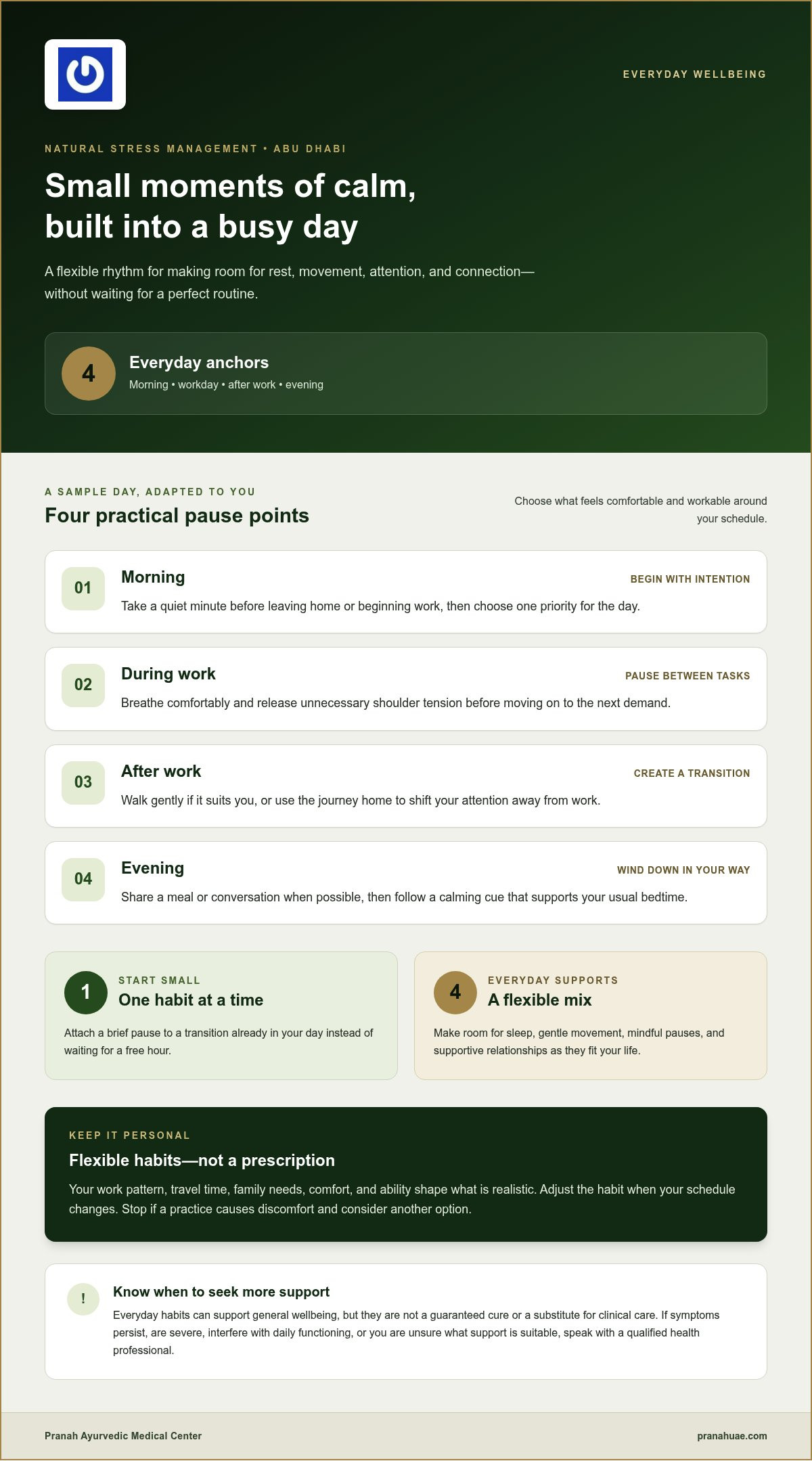
A sample day could look like this, adjusted to your commitments:
- Morning: Take a quiet minute before leaving home or beginning work, then choose one priority for the day.
- During work: Pause between tasks to breathe comfortably and release unnecessary shoulder tension.
- After work: Walk gently, if it suits you, or use the transition home to shift your attention away from work.
- Evening: Share a meal or conversation when possible, then follow a calming cue that supports your usual bedtime.
This is an illustration, not a prescription. Your work pattern, travel time, family needs, and personal comfort determine what is realistic.
How can you make a routine sustainable?
Start with one small practice and notice how it feels over time. You could attach a mindful pause to a morning transition or take a few comfortable breaths when your workday ends. Choose an anchor that already exists in your routine instead of waiting for a free hour. If your schedule changes, adjust the habit rather than treating a missed day as failure.
Keep the practice easy to resume and review whether it fits your life. If individual guidance would be useful, a consultation with a qualified Ayurvedic doctor can give you space to discuss your wellbeing needs and relevant options. Explore Ayurvedic consultation and wellness support as one possible part of a broader approach.
Natural Stress Methods Compared: Self-Care, Ayurveda, and Clinical Support
Different forms of support serve different purposes. Personal habits can support everyday wellbeing. Practitioner-guided Ayurvedic care offers a traditional, individualized perspective. Mental-health services assess and address emotional distress through clinical care. These approaches may complement one another, but none is a universal solution. Choose based on your needs, preferences, and how much distress affects daily life.
| Approach | Primary role | Consideration |
|---|---|---|
| Personal self-care | Build everyday practices such as rest, movement, or mindful pauses. | Adapt habits to your comfort and routine. They are not a substitute for needed assessment. |
| Ayurvedic consultation | Discuss individual wellbeing and relevant traditional care options with a qualified Ayurvedic doctor. | Care should be individualized. Don’t assume a treatment will produce a particular result. |
| Mental-health support | Assess persistent or disruptive distress and provide appropriate clinical care. | Seek qualified support when symptoms continue, worsen, or interfere with daily functioning. |
“Natural” does not mean risk-free, and seeking professional help is not a sign of failure. Some practices or treatments may not suit everyone. Wellbeing approaches should not delay assessment or replace prescribed care. A balanced approach to natural stress management in Abu Dhabi keeps each option in its proper role: supportive habits for daily life, individualized wellness guidance where appropriate, and clinical care when symptoms warrant it.
What can an Ayurvedic consultation contribute?
An Ayurvedic consultation is an opportunity to discuss personal wellbeing concerns and relevant care options with a qualified practitioner. At Pranah Ayurvedic Medical Center on Hamdan Street, qualified Ayurvedic doctors bring classical Ayurvedic knowledge together with modern medical precision. Shirodhara is one of the center’s therapies. Its inclusion here is not a promise of stress relief or any specific outcome.
When is mental-health support important?
Consider qualified mental-health support if distress persists, worsens, or disrupts sleep, relationships, work, or other daily responsibilities. If there is immediate danger or a risk of harm, seek urgent local emergency support. Abu Dhabi’s 800-SAKINA hotline, at 800-725462, provides free, confidential, 24/7 mental-health support, including psychological first aid and crisis intervention. Wellness practices can complement appropriate care, but shouldn’t postpone assessment or replace treatment already prescribed.
You don’t have to choose between self-care and professional guidance as if only one can be appropriate. You might maintain a manageable daily habit while discussing ongoing concerns with a qualified professional. The useful question is whether a form of support fits your situation and respects the limits of what it can provide.
A Practical Natural Stress-Management Plan for Abu Dhabi
A useful plan fits the life you have, not an ideal schedule. Work hours, family commitments, and daily travel can vary, so use this four-step sequence to test a small change. It’s a personal wellbeing tool, not a diagnosis or substitute for professional assessment.
- Notice patterns. Briefly note situations or routines that tend to coincide with disrupted sleep, recurring tension, or feeling unsettled.
- Choose one habit. Select a manageable action, such as a short pause after arriving at work or a gentle walk at a comfortable time.
- Practise consistently. Attach the habit to a familiar cue, while allowing for days when work or travel changes your plans.
- Review its effect. After a reasonable period, consider whether the habit feels manageable and whether you notice a helpful difference in your day.
Keep natural stress management practical for your circumstances in Abu Dhabi. If your commute leaves little room for a walk, a quiet pause at home may be more realistic. If your workday changes from week to week, choose a cue that travels with you, such as the transition between tasks.
How do you recognize patterns without over-monitoring?
Keep any notes brief and optional. You might record what was happening, whether sleep or physical tension felt different, and how the day seemed to affect you. The aim is to notice useful patterns, not scrutinize every feeling or reach a diagnosis. If tracking increases worry or distress, stop. You can reflect without keeping a record.
For recurring physical tension, consider the context and avoid assuming stress is the cause. The deep tissue massage guide discusses massage as a separate topic, not as a guaranteed way to manage stress. Persistent or concerning discomfort deserves appropriate assessment.
How should you review your approach?
Choose a reasonable point to review your approach rather than judging it every day. Ask yourself: Is this habit practical with my current work and travel schedule? Does it feel comfortable? Have I noticed any change in my routine or wellbeing? Where possible, change one element at a time so you can better understand what suits you. Adapt the practice if your schedule shifts, and let it go if it feels unhelpful.
If symptoms persist, worsen, or interfere with daily life, seek qualified professional assessment rather than relying on a self-care plan. Ongoing pain is a separate concern. The Ayurvedic pain relief guide explores that topic, but doesn’t replace an appropriate assessment.
For individualized wellness guidance, explore an Ayurvedic consultation at Pranah and discuss your needs with a qualified Ayurvedic doctor. This guidance can complement daily habits, not replace prescribed or mental-health care.
Personalized Ayurvedic Stress Support at Pranah in Abu Dhabi
Ayurvedic care can be one part of a broader wellbeing plan when it takes individual needs into account. At Pranah Ayurvedic Medical Center, qualified Ayurvedic doctors offer consultations and therapeutic services informed by classical Ayurvedic knowledge and modern medical precision. If you’re exploring natural stress management in Abu Dhabi, a conversation with a practitioner can help you discuss personal concerns and relevant wellness options without assuming a particular treatment will produce a specific result.
What can a first conversation about wellbeing cover?
Begin in your own words. Describe what has changed in your routine, what concerns you, and what you hope to address. Share relevant context such as work demands, rest, or physical discomfort if it feels useful. The purpose is to discuss your individual wellbeing, not to fit your experience into a predetermined programme or promise an outcome.
Care should reflect the person, their circumstances, and the nature of their concerns. A qualified Ayurvedic doctor can discuss relevant wellness options and explain how they fit within an Ayurvedic perspective. Shirodhara is one of the therapies offered at Pranah. It is a listed therapy, not a guaranteed treatment for stress, anxiety, sleep difficulties, or another health concern.
Before a conversation, it may help to note a few questions: What would I like guidance on? Are there routines or symptoms I want to describe? Am I receiving other care that should be considered? You don’t need to prepare a complete account. A clear description of what matters to you can make the discussion more relevant.
How can readers take a considered next step?
Pranah is located on Hamdan Street in Abu Dhabi. Explore the center’s Ayurvedic services to understand its traditional wellness care and consider whether a consultation is relevant to your needs. Think about what you want from the discussion and keep expectations measured: individualized guidance is not a promise of a particular result.
Ayurvedic care should remain complementary to appropriate medical or mental-health support. Continue prescribed treatment, and don’t delay qualified assessment if distress is persistent, worsening, or interfering with daily life. A wellness consultation and clinical care have different roles; choosing to explore one does not require setting aside the other.
If you’d like to learn more, explore Pranah’s Ayurvedic services and consider a consultation as a next step. Make the decision thoughtfully, at your own pace, with your wider wellbeing and existing care in view.
Choose a Steady Next Step for Your Wellbeing
Progress can begin with a thoughtful choice, not a complete overhaul. Consider what would be most useful now: continuing a simple daily habit, seeking qualified guidance, or discussing ongoing concerns with a mental-health professional. These paths can work alongside one another. Seeking additional support doesn’t mean you’ve failed to manage things on your own.
As you consider natural stress management in Abu Dhabi, keep your next step personal and realistic. If Ayurvedic care feels relevant, Pranah’s qualified Ayurvedic doctors can discuss your concerns and appropriate options, including therapies such as Shirodhara. This traditional care can complement, but should not replace, prescribed treatment or needed mental-health support.
Explore Ayurvedic care at Pranah in Abu Dhabi and consider whether a consultation is right for you. A measured, informed approach can make space for care that respects your needs and supports your wellbeing over time.
Frequently Asked Questions
What is the most natural way to manage stress?
There isn’t one natural method that works best for everyone. Start with a step that addresses a need you can identify, such as protecting time to unwind after work or making space for a short walk if it feels comfortable. Keep the change modest and notice whether it fits your day. If stress is persistent or disruptive, self-care alone may not be enough.
Can Ayurveda help with stress management?
Ayurveda may offer an individualized wellbeing perspective, but it shouldn’t be treated as a guaranteed stress remedy. A consultation can be a way to discuss your routines, concerns, and relevant care options. Shirodhara is one Ayurvedic therapy available at Pranah, but no specific stress outcome should be assumed. Continue prescribed treatment and mental-health care, and discuss any planned complementary treatment with your healthcare professional.
How can I manage stress during a busy workday in Abu Dhabi?
Choose a practical adjustment that doesn’t compete with your workload. For example, write down the next task before switching between projects, silence nonessential notifications during focused work, or set a clear stopping point for the day. If you travel by car, wait until you’re safely parked before using a breathing or reflection exercise. Adapt the approach to your responsibilities and commute.
Is natural stress management safe for everyone?
No. “Natural” doesn’t automatically mean safe or suitable for every person. Herbal products and wellness treatments may have risks or may not fit with a health condition, pregnancy, or medicines. Before starting a supplement or treatment, explain your health circumstances and current medicines to a qualified healthcare professional. Stop a practice that causes discomfort, and seek advice if you’re uncertain about its suitability.
When should I seek professional help for stress?
Seek qualified support if distress persists, gets worse, or makes it difficult to manage work, relationships, sleep, or everyday responsibilities. If you may harm yourself or someone else, or face immediate danger, seek urgent local emergency support. In Abu Dhabi, the 800-SAKINA hotline at 800-725462 offers confidential mental-health support and crisis intervention. Natural stress management approaches should never delay urgent assessment.
Can stress affect sleep and physical wellbeing?
Stress may coincide with difficulty settling at night, muscle tightness, or changes in appetite and energy, though these experiences don’t confirm stress as the cause. Notice whether a change appears alongside a particular demand and whether it continues when that pressure eases. If a physical symptom is new, severe, persistent, or concerning, seek medical advice rather than attributing it to stress alone.
How long does it take to feel less stressed with natural methods?
There’s no reliable timeline or guaranteed response. Some people may find a small routine useful sooner, while others need time, different forms of support, or assessment of other contributing factors. Choose a reasonable point to review whether a habit feels manageable and whether your daily experience is changing. Don’t wait for a set period if symptoms worsen or begin to interfere with functioning.